
 EN
EN
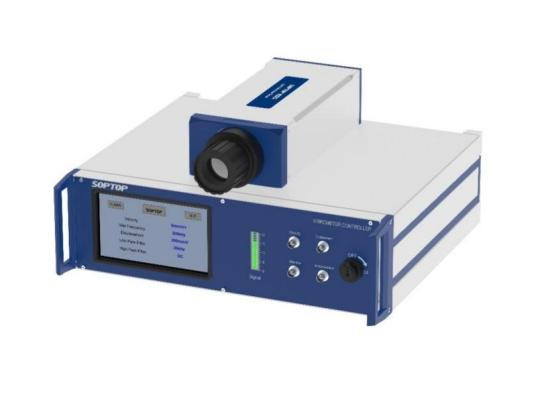
How Ultrasonic Atomization Works: Physics and Process Fundamentals
Capillary Wave Resonance and Droplet Ejection Mechanism
Ultrasonic atomization takes molten metal and turns it into spherical powder through high frequency vibrations between 20 to 200 kHz applied to a sonotrode either submerged in or covered with the melt. The process works when the vibration gets strong enough for a specific material. At this point, capillary waves start forming on the surface of the molten film. These waves break down the interface stability and cause tiny droplets to be ejected from the melt. As they fly through the air, these droplets harden into round particles. There's actually a mathematical relationship governing how big these droplets end up being. The median size D50 relates to the formula d is proportional to sigma divided by rho times frequency squared, all raised to the power of one third. Here, sigma stands for surface tension, rho represents density, and f is simply the frequency. Rajan and colleagues found this relationship back in 2001. Because of this inverse connection between size and frequency, manufacturers can control particle dimensions between about 20 and 100 micrometers just by adjusting the frequency setting. This makes the technique especially useful for powder metallurgy applications where consistent particle size matters a lot.
Role of Acoustic Radiation Pressure and Rayleigh–Taylor Instability in Melt Fragmentation
Acoustic radiation pressure amplifies interfacial disturbances, while Rayleigh–Taylor instability drives fragmentation at the liquid–gas boundary. As vibration intensity rises, capillary wave nodes accelerate upward, forming ligaments that detach under inertial forces. Critical process parameters include:
- Melt viscosity: Lower-viscosity alloys (e.g., aluminum) fragment more readily into finer particles
- Wettability: Consistent sonotrode wetting ensures stable melt-film formation
- Amplitude: Must exceed material-dependent thresholds to overcome surface tension
| Parameter | Effect on Fragmentation | Typical Range |
|---|---|---|
| Frequency | Inverse correlation with particle size | 20–200 kHz |
| Melt Temp | Lower temperatures increase viscosity, reducing fragmentation efficiency | ±50°C of liquidus |
| Amplitude | Higher amplitudes accelerate ligament formation | 5–50 µm |
The physics based process creates metal powder with no pores and no satellites, which is different from what happens with gas atomization methods where around 15 to 30 percent of the particles end up with internal voids according to recent studies in additive manufacturing from 2023. When it comes to controlling how droplets are ejected, this method gives manufacturers much better precision. That makes it ideal for applications requiring tight particle size distribution like medical implants and parts used in aerospace made from Ti-6Al-4V alloy. However getting down to below 10 microns still faces challenges mainly because of limitations in transducer power output plus there's increased risk of oxidation when processing takes longer than usual.
Key Equipment Components and Design Considerations for Metal Powder Systems
High-efficiency transducer–generator coupling and thermal stability under continuous operation
For ultrasonic atomization to work properly, the transducer needs to match up well with the generator in terms of impedance so that maximum vibrational energy gets transferred to the melt material. When there's a mismatch in how these components couple together, energy gets lost along the way which lowers the amplitude and messes up the formation of those important capillary waves. Running these systems continuously requires good heat control too. That's why most setups come with built-in cooling mechanisms that keep things from getting too hot and drifting out of their optimal frequency range. These cooling features help maintain consistent particle size distribution even during long production runs lasting several hours at a time.
Atomization head optimization: Nozzle geometry, gas cap dynamics, and tilt-angle effects on particle size distribution
The shape of nozzles plays a big role in determining how thick and fast the melt film becomes. Convergent-divergent designs help create smooth, even coatings by promoting laminar flow rather than turbulent messiness. When it comes to keeping things stable during processing, placing an inert gas cap at just the right spot makes all the difference. This setup helps control those pesky capillary waves and protects the melt from getting oxidized by air exposure. Tilting the sonotrode between 5 to 15 degrees changes how ligaments detach from the main stream. This adjustment leads to narrower particle size distribution and cuts down on satellite formations significantly. Tests show this approach can reduce satellites by about 40% when working with materials used in powder metallurgy applications.
Performance Comparison: Advantages and Constraints of Ultrasonic Atomization for Metal Powder
Superior sphericity, zero internal porosity, and reproducibility vs. gas/water atomization
The powder quality from ultrasonic atomization is really impressive. Roundness measurements hit around 0.98 because the process controls droplets at low speeds, which gets rid of those pesky satellite droplets we see with traditional gas or water methods that shoot things too fast. What makes this method stand out even more? No internal porosity whatsoever. Regular gas atomization leaves structural voids inside about 15 to 30 percent of all particles according to recent research in additive manufacturing from 2023. Flow properties improve significantly too, with better packing density gains between 18 and 25 percent. Plus there's much greater consistency across batches since particle size distribution varies less than plus or minus 3 percent. That's way better control compared to older methods where variations typically jump around plus or minus 15 percent.
Practical particle size limits: Why sub-10 µm metal powder remains challenging
Producing metal powders below 10 microns faces serious challenges from both basic physical principles and what equipment can actually handle. The D50 particle size gets smaller as frequency goes up, following something like D50 proportional to 1 over square root of f. But getting down to those sub-10 micron sizes means pushing frequencies past 400 kHz, which most commercial transducers simply cannot manage without overheating or breaking down. When frequencies get too high, they eat up more energy and cause problems with the melt pool stability. Plus there's this whole issue where ultra fine powders oxidize much faster. And let's not forget about the specialized handling requirements either. Right now, nobody has successfully incorporated these necessary inerting systems into large scale ultrasonic manufacturing setups.
Controlling Metal Powder Characteristics Through Process Parameters
Frequency–PSD relationship: Quantifying D50 shifts across 120–200 kHz (Inconel 718, Ti-6Al-4V)
Frequency is the most direct lever for PSD control. For Inconel 718, raising frequency from 120 kHz to 200 kHz reduces D50 by 15–20% due to intensified capillary wave fragmentation (Materials Science Letters 2024). Ti-6Al-4V exhibits parallel trends but requires tighter thermal control to suppress oxide formation during fine-size generation.
| Frequency (kHz) | Inconel 718 D50 (µm) | Ti-6Al-4V D50 (µm) |
|---|---|---|
| 120 | 45–50 | 38–42 |
| 160 | 32–38 | 28–32 |
| 200 | 25–30 | 20–25 |
Melt temperature, feed rate, and inert gas flow effects on morphology consistency
The melt temperature needs strict control. When aluminum alloy temperatures vary by plus or minus 25 degrees Celsius, this can reduce sphericity by as much as 18 percent because it messes with how the metal forms those tiny connections called ligaments. The feed rate should stay somewhere between 5 and 10 kilograms per hour. This range helps maintain good atomization without creating too many small satellite particles. At the same time, keeping inert gas flowing at least 15 liters per minute is important. This stops unwanted oxides from forming, which matters a lot when working with reactive metals such as titanium. Get all these factors right together and manufacturers can achieve powder size variation below 3 percent for aerospace quality materials according to recent industry tests in 2023.
FAQ
What is ultrasonic atomization used for?
Ultrasonic atomization is used for turning molten metal into spherical powder, which is especially useful in powder metallurgy applications where consistent particle size is important. It's commonly applied in industries requiring precise particle size distribution like medical implants and aerospace components.
How does frequency affect the particle size in ultrasonic atomization?
The particle size in ultrasonic atomization is inversely related to frequency. Higher frequencies lead to smaller particles, allowing manufacturers to control dimensions by adjusting the frequency settings within a range of 20 to 200 kHz.
What are the advantages of ultrasonic atomization compared to gas or water atomization?
Ultrasonic atomization offers better control over droplet ejection, resulting in superior sphericity, zero internal porosity, and improved consistency across batches. Unlike gas atomization, which can leave 15-30% of particles with voids, ultrasonic methods yield none.
Why is producing sub-10 micron metal powders challenging?
Producing sub-10 micron metal powders is challenging due to equipment limits on frequency—commercial transducers struggle beyond 400 kHz—and increased risks of oxidation and instability in melt pools at higher frequencies.
Table of Contents
- How Ultrasonic Atomization Works: Physics and Process Fundamentals
- Key Equipment Components and Design Considerations for Metal Powder Systems
- Performance Comparison: Advantages and Constraints of Ultrasonic Atomization for Metal Powder
- Controlling Metal Powder Characteristics Through Process Parameters
- FAQ