
 EN
EN
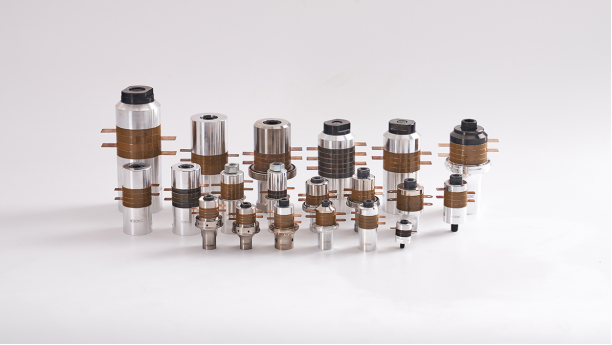
Enhanced Precision in Non-Destructive Testing with Ultrasonic Transducer Technology
How ultrasonic waves enable high-resolution flaw detection in industrial materials
Ultrasonic transducers offer really impressive accuracy for what's called non-destructive testing, or NDT for short. They work by sending out those high frequency sound waves that go right through solid stuff without causing any harm at all. When these waves hit something odd inside the material like cracks, air pockets, or foreign particles, they bounce back as little echoes. Inside the device itself are these special piezoelectric components that turn those mechanical vibrations we can't see into actual electrical signals. Technicians then read these signals to find where problems might be hiding deep inside materials, sometimes down to just a few millimeters. What makes this approach so valuable is that it completely avoids having to cut up or destroy samples just to check for issues. Instead, engineers get vital information about how strong and reliable a structure really is without ever touching it.
The role of frequency and wave propagation in detecting micro-cracks and voids
How sensitive our detection system is really comes down to picking the right frequency and understanding how waves behave. 2–10 MHz frequencies are a sweet spot for industrial NDT applications using an ultrasonic transducer, balancing resolution and penetration depth. Lower frequencies go deeper into thicker materials though, which makes them useful for different situations. When measuring how deep a defect goes, we rely on timing how long it takes for waves to travel through the material. Proper calibration keeps things accurate within about half a tenth of a percent. Getting good wave transmission means applying some sort of couplant between the sensor and what we're testing. This fills in any air spaces and lets the energy move properly so we get trustworthy readings in the end.
Case Study: Aerospace component inspection at Hangzhou Hangchao Technology Co., Ltd.
One major player in the aerospace industry recently implemented ultrasonic transducer tech for checking turbine blades, something that lets them spot hidden problems regular inspections just can't catch. Their new system found tiny cracks as small as 0.08 mm with nearly perfect accuracy at 99.7%, which cut down on failed components by almost two thirds during the first twelve months of operation. The company saved around $2.3 million dollars that would have gone toward fixing warranty issues and stopping production lines, all without compromising on those strict FAA requirements they need to follow for aircraft parts.
Trend: Adoption of phased array ultrasonic transducers for complex geometries
More and more manufacturers are adopting phased array ultrasonic transducers or PAUT when they need to check those tricky spots that regular equipment can't reach. Traditional single element probes just don't cut it for complicated geometries anymore. With PAUT systems, there are actually dozens of individual elements working together, each one controlled separately so operators can direct and focus ultrasound beams electronically rather than having to physically move around. What does this mean? It allows thorough inspection of welds, curved metal parts, and all sorts of complicated machinery components using advanced beam control methods. The results speak for themselves too - better images overall, quicker inspection times, and much clearer identification of flaws. That's why so many quality control departments have made the switch recently, especially where safety is absolutely paramount.
Improved Predictive Maintenance Through Ultrasonic Transducer Technology
Ultrasonic transducers transform predictive maintenance by capturing high-frequency acoustic emissions from equipment long before catastrophic failures occur. These sensors detect sounds beyond human hearing, allowing early identification of bearing wear, lubrication issues, and incipient component degradation.
Early detection of bearing wear and lubrication issues using ultrasonic sensors
Ultrasonic sensors pick up on those unique high frequency sounds made when metals rub together or when there's not enough lubricant in bearings. What makes these sensors so valuable is that they catch problems long before anything shows up in regular vibration readings, particularly for equipment that doesn't spin very fast. Research indicates that using ultrasonic tech lets maintenance crews spot lubrication issues as much as 70 percent sooner compared to old school techniques. This early warning system stops machines from getting too dry (which wears them down faster) or getting too greasy (which actually makes them work harder). When plant managers have this kind of information at their fingertips, they can plan maintenance around scheduled shutdowns instead of dealing with unexpected breakdowns that disrupt operations.
Acoustic emission analysis and signal thresholding for fault prediction
Signal processing takes those messy ultrasonic readings and transforms them into something actually useful for maintenance teams. When it comes to acoustic emissions, engineers basically set limits on what counts as normal versus abnormal sounds coming from machinery. The system then filters out all the random background noise but boosts those specific frequencies between about 20 and 100 kilohertz where we can spot tiny issues like cracks forming inside equipment, bubbles collapsing in fluids, or even small electrical discharges happening within components. Most modern systems learn what each piece of machinery should sound like when everything's working properly. Any significant changes get highlighted right away so technicians know something might be going wrong before it becomes a major problem. Some tests show these systems catch potential failures around 95 percent of the time, though results do vary depending on the type of equipment being monitored.
Case Study: Reducing wind turbine gearbox downtime by 40% with continuous monitoring
One large renewable energy company installed permanent ultrasonic sensors throughout their wind farm gearboxes, which had been causing about 60% of all unexpected shutdowns before this change. These sensors picked up on problems with bearings and gear teeth that regular vibration checks just didn't catch. After implementing the new system, they saw a pretty impressive drop in downtime related to gearboxes - around 40% less in the first year alone. That translated into roughly $3.2 million saved from both lost power generation and repair costs. Plus, keeping tabs on these components continuously helped extend how long each gearbox lasted by approximately 18 months thanks to better timing on when maintenance was needed.
Trend: Integration with IoT platforms for real-time equipment health dashboards
Combining ultrasonic sensors with internet connectivity is changing how we approach equipment maintenance. Today's transducers come with built-in wireless tech that sends acoustic information straight to the cloud as it happens. The system collects all this data from sensors spread across facilities and then runs machine learning algorithms to spot when something might fail soon and guess how long before replacement becomes necessary. Tech crews can check simple dashboards that show how healthy each piece of machinery is, what needs attention first, and what steps to take next. Being able to watch remote equipment from anywhere really helps managers make better choices about where to send staff and parts, cuts down on wasted resources, and keeps production running smoothly even when problems pop up unexpectedly.
Increased Efficiency in Production Process Control via Ultrasonic Sensing
Real-time thickness measurement in metal rolling processes
Ultrasonic transducers let manufacturers check metal thickness on the fly during rolling operations, so they can make quick fixes without stopping the whole production line. These devices pick up changes down to about 0.1 mm either way, which means they keep things within spec even when running at top speed. What makes them stand out is how well they handle tough conditions. They work reliably in super hot environments and rough industrial settings where traditional contact methods would either give wrong readings or just break down completely. This reliability saves time and money for plant operators who need accurate measurements day after day.
Time-of-flight measurement and calibration for precise dimensional control
Precision stems from advanced time-of-flight calculations combined with dynamic calibration routines that compensate for temperature shifts and material variability. The non-destructive testing methodology used in modern systems achieves micrometer-level accuracy, far surpassing manual inspection while eliminating human error. This consistency supports stringent quality requirements across production batches.
Case Study: Closed-loop feedback in steel production improving yield by 15%
One large steel manufacturing plant recently put ultrasonic transducers to work in their hot rolling operations, setting up what they call a closed loop system that tweaks roller pressure and speed as it goes along, responding to real time thickness measurements. The results? About a 15 percent boost in overall yield because there was just so much less scrap coming from parts that didn't meet size specs, plus workers spent far less time stopping production for those tedious manual inspections. And let's not forget about maintenance either. With these sensors constantly watching everything, the plant could plan repairs before breakdowns happened. Unplanned equipment failures dropped around 22% during the first twelve months after installation, which is pretty impressive when you think about how expensive downtime can get. Best part? All this happened without compromising the consistency of the final products rolling off the line.
Trend: AI-driven adaptive control systems using ultrasonic input data
AI is changing how we manage manufacturing processes through analysis of massive amounts of ultrasonic data streams, allowing for real time optimization of factory settings. The machine learning models behind this technology can spot those tiny connections between what the ultrasonic sensors pick up and how good the finished products actually are. They then figure out the best possible configurations and tweak them automatically without human intervention. These smart systems crunch through literally thousands of data points every single second, which means production lines can basically tune themselves while running. The result? Factories become more efficient day by day as they adapt to conditions on the fly, all thanks to constant monitoring and immediate response to what's happening right now in the production environment.
Reliable Performance of Ultrasonic Transducers in Harsh Environments: Obstacle Detection and Durability
Robust operation of ultrasonic transducers in dusty, high-temperature industrial settings
Ultrasonic transducers work well even when things get tough out there. They handle all sorts of harsh conditions like dust buildup, moisture exposure, and big temperature changes ranging from minus 40 degrees Celsius up to 85 degrees Celsius. The solid state construction plus those sealed housing units keep contaminants away, something optical sensors just cant do when faced with lots of particles floating around. Because of this toughness, these devices are commonly found in places such as mines, metal fabrication plants, and other industrial settings where the environment constantly throws challenges at equipment.
Echo reflection dynamics and noise filtering for accurate distance measurement
Sophisticated signal processing allows ultrasonic sensors to differentiate true target echoes from ambient noise, maintaining millimeter-level accuracy even in steam, light fog, or airborne debris. Adaptive thresholding and time-of-flight analysis ensure dependable distance measurement—critical for automation systems where safety and precision depend on reliable obstacle detection.
Case Study: Ultrasonic-guided automated guided vehicles (AGVs) in warehouse logistics
One major logistics company recently upgraded their fleet of automated guided vehicles with ultrasonic sensor arrays for better movement around busy warehouses. After running these systems for well over half a million hours, they saw impressive results: nearly 99.8 percent reliability in object detection and a dramatic drop in accidents down to just 25% of what they were before switching from laser navigation. These ultrasonic sensors proved particularly good at spotting things like plastic containers that often fool other systems, plus they worked reliably even when there was lots of dust floating around in those tall storage areas where traditional optical systems tend to fail. Warehouse managers have been especially pleased with how much smoother operations have become since implementing this technology.
Overcoming limitations: Challenges in detecting soft or angled surfaces
Ultrasonic transducers are pretty tough overall, but they do run into trouble when dealing with soft stuff like fabrics or foams, plus those tricky angled surfaces that just seem to bounce sound all over the place. When working with materials such as clothing or cushioning products, technicians often have to tweak the frequency settings quite a bit and sometimes even modify how the equipment is set up. Some folks in the industry have found that using multiple emitters arranged at different angles works better for consistent readings. There's also this thing called frequency hopping that helps out too. Still, anything past about a 45 degree angle can be problematic. For complete coverage on these steep surfaces, many setups end up needing extra sensors alongside the main ultrasonic system anyway.
Cost-Effectiveness and Scalability of Ultrasonic Transducer Solutions
Declining total cost of ownership due to long lifespan and low maintenance needs
Ultrasonic transducer systems typically reduce total cost of ownership by 30–40% compared to mechanical alternatives. Facilities report annual maintenance savings of $50,000–$100,000 per production line due to minimal servicing requirements and extended service life. Many transducers operate for years without recalibration or replacement, contributing to sustained ROI.
Design simplicity and solid-state construction enhancing reliability
With no moving parts, ultrasonic transducers benefit from solid-state construction that resists mechanical wear. This simplicity reduces failure points, lowers technical support demands, and supports uninterrupted operation in demanding industrial settings—directly improving system reliability and cost efficiency.
Case Study: Deployment across 50+ production lines achieving 98% uptime over three years
One large-scale deployment across more than 50 production lines maintained 98% uptime over three years—significantly outperforming legacy sensor systems. This real-world example underscores the scalability of ultrasonic solutions and their ability to deliver consistent performance across diverse manufacturing environments.
Strategy: Standardizing transducer modules for scalability and rapid replacement
Leading manufacturers adopt modular standardization to streamline deployment and maintenance. By using uniform transducer modules enterprise-wide, companies simplify inventory, accelerate replacements, and scale systems efficiently. This strategy reduces downtime, supports rapid expansion, and ensures compatibility across facilities regardless of application or location.
Frequently Asked Questions (FAQ)
What is non-destructive testing (NDT) with ultrasonic transducers?
Non-destructive testing (NDT) using ultrasonic transducers involves utilizing high-frequency sound waves to detect internal flaws in materials without causing damage.
How do ultrasonic transducers detect flaws?
Ultrasonic transducers emit sound waves that bounce off defects like cracks or voids in materials, generating echoes that are then converted into electrical signals for analysis.
What are phased array ultrasonic transducers (PAUT)?
Phased array ultrasonic transducers (PAUT) consist of multiple elements that can be electronically controlled to focus ultrasound beams, allowing detailed inspection even in complex geometries.
How does ultrasonic technology aid in predictive maintenance?
Ultrasonic technology captures high-frequency acoustic emissions from equipment, allowing early detection of issues like bearing wear and lubrication faults before they cause failures.
Can ultrasonic transducers operate in harsh environments?
Yes, ultrasonic transducers are designed to work in challenging conditions, such as dusty, high-temperature settings, due to their robust construction and advanced noise filtering.
How do ultrasonic transducers enhance cost-effectiveness?
Ultrasonic transducers reduce ownership costs due to their long lifespan, low maintenance needs, and solid-state construction that minimizes wear and tear.
Table of Contents
-
Enhanced Precision in Non-Destructive Testing with Ultrasonic Transducer Technology
- How ultrasonic waves enable high-resolution flaw detection in industrial materials
- The role of frequency and wave propagation in detecting micro-cracks and voids
- Case Study: Aerospace component inspection at Hangzhou Hangchao Technology Co., Ltd.
- Trend: Adoption of phased array ultrasonic transducers for complex geometries
-
Improved Predictive Maintenance Through Ultrasonic Transducer Technology
- Early detection of bearing wear and lubrication issues using ultrasonic sensors
- Acoustic emission analysis and signal thresholding for fault prediction
- Case Study: Reducing wind turbine gearbox downtime by 40% with continuous monitoring
- Trend: Integration with IoT platforms for real-time equipment health dashboards
- Increased Efficiency in Production Process Control via Ultrasonic Sensing
-
Reliable Performance of Ultrasonic Transducers in Harsh Environments: Obstacle Detection and Durability
- Robust operation of ultrasonic transducers in dusty, high-temperature industrial settings
- Echo reflection dynamics and noise filtering for accurate distance measurement
- Case Study: Ultrasonic-guided automated guided vehicles (AGVs) in warehouse logistics
- Overcoming limitations: Challenges in detecting soft or angled surfaces
-
Cost-Effectiveness and Scalability of Ultrasonic Transducer Solutions
- Declining total cost of ownership due to long lifespan and low maintenance needs
- Design simplicity and solid-state construction enhancing reliability
- Case Study: Deployment across 50+ production lines achieving 98% uptime over three years
- Strategy: Standardizing transducer modules for scalability and rapid replacement
-
Frequently Asked Questions (FAQ)
- What is non-destructive testing (NDT) with ultrasonic transducers?
- How do ultrasonic transducers detect flaws?
- What are phased array ultrasonic transducers (PAUT)?
- How does ultrasonic technology aid in predictive maintenance?
- Can ultrasonic transducers operate in harsh environments?
- How do ultrasonic transducers enhance cost-effectiveness?