
 EN
EN
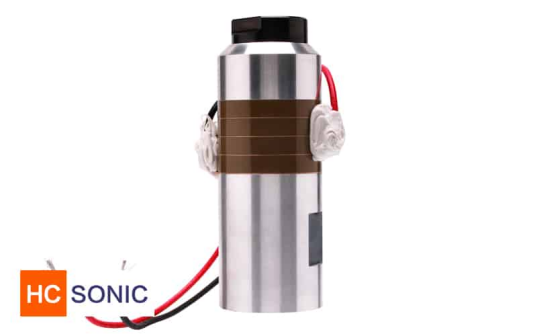
Understanding the Ultrasonic Transducer: Core Function and Working Principle
How ultrasonic transducers work: The principle of piezoelectric conversion
Ultrasonic transducers work by using something called piezoelectric conversion where they turn electrical energy into those really fast mechanical vibrations we call ultrasound. Take a look at what happens when we apply an alternating voltage to materials like lead zirconate titanate (PZT) ceramics. The stuff actually changes shape pretty quickly because of this thing called the inverse piezoelectric effect, which creates those ultrasonic waves we need for various purposes. What makes these transducers so useful is their ability to do both directions of this process. They can not only create sound waves but also pick up the echoes coming back by turning that mechanical pressure back into electricity again. Because of this dual functionality, these devices have become pretty much indispensable across many fields. We see them everywhere from hospitals doing scans on patients to factories monitoring equipment conditions without touching anything directly, right down to processes that modify materials at microscopic levels.
Core components and design of an ultrasonic transducer
Ultrasonic transducers typically consist of several main parts: piezoelectric ceramics, metal electrodes, protective housings, and those special acoustic matching layers we often talk about. The ceramic part is basically what does all the work converting electrical signals into sound waves, with the electrodes applying voltage across it to make things happen. Housing serves two purposes really - keeping everything mechanically stable and protecting against moisture or dust getting inside. Those matching layers sit on top and help get better connection between the device and whatever material it's working with, which makes a big difference in how much energy actually gets transferred properly. Some newer models also have damping materials placed behind the ceramic section. This helps shorten that annoying ringing effect after the signal stops, giving us cleaner results when taking images or controlling outputs more precisely in industrial settings.
Key performance metrics: frequency, power output, and efficiency
When assessing how well an ultrasonic transducer works, we look at three main things: operating frequency, power output, and how efficiently it converts electrical signals into sound waves. The frequency range matters a lot too. Industrial systems typically work around 20 kHz while medical ultrasound devices can go up to several MHz. Higher frequencies give better image quality but don't penetrate materials as deeply. Power output is measured in watts and tells us how strong the ultrasonic energy actually is, which becomes really important when doing things like welding metals or cleaning parts. Good transducers manage to convert more than 85% of their electrical input into usable acoustic energy, which means they run cooler and last longer overall. All these characteristics together decide whether a particular transducer will work best for something delicate like medical imaging or tougher jobs in manufacturing plants where durability counts.
Ultrasonic Transducer Types: Piezoelectric vs. Magnetostrictive Technologies
Piezoelectric vs. magnetostrictive transducers: Structural and operational differences
The way piezoelectric and magnetostrictive transducers create ultrasonic waves is quite different at their core. For piezoelectric models, we're looking at ceramic materials that actually bend and twist when electricity runs through them. These movements produce those really precise high frequency vibrations that work great in small spaces where quick response matters. On the other side of things, magnetostrictive transducers need those big metal cores usually made from nickel or iron cobalt mixtures. When coils around these metals generate changing magnetic fields, the cores physically expand and contract. But this whole process creates much larger units that often need special cooling and extra structural support. That makes them less flexible for today's equipment needs. Both types can definitely generate strong ultrasound signals, but most engineers will tell you that piezoelectric options win out because they're simpler to build and react faster to control signals, which explains why they dominate so many current applications across industries.
Efficiency comparison under high-power ultrasound applications
When working with high power applications, piezoelectric transducers generally perform better than their magnetostrictive alternatives. The energy conversion efficiency hits around 95% for piezoelectric models while magnetostrictive systems typically hover between 50% and 60%. This difference matters a lot in real world scenarios where lower power draw means less heat buildup and longer lasting equipment, which is crucial for factories running nonstop shifts. Another big plus with piezoelectric technology is how well they handle adjustments to both frequency and amplitude. This lets operators maintain steady energy output even when conditions change unexpectedly during production runs. Plus these devices work great at much higher frequencies too, giving manufacturers tighter control over their processes. That's why so many companies in fields like car manufacturing, electronic component fabrication, and medical instrument production have switched to piezoelectric solutions for their critical operations.
Industry paradox: Why piezoelectric dominates despite magnetostrictive durability
Magnetostrictive transducers can last for years even in tough environments, but piezoelectric tech takes over most of the market space, probably around 95% or so. Why? Well, piezoelectric parts just work better in many ways they're more efficient, make less noise during operation, take up less room on equipment, and offer much more flexibility when designing new products. Recent improvements in how ceramics are made and how components get protected from damage have really extended their lifespan too. The real game changer comes when looking at modern factories though. These piezoelectric sensors play nicely with computer controls and fit right into automated assembly lines, giving them a huge advantage in today's smart manufacturing setups. Magnetostrictive models still hang on in certain specialized areas where machines experience massive mechanical forces, but when considering all factors together performance, price point, and ability to scale up production piezoelectric remains the clear winner for most applications.
From Transducer to Vibrator: How Ultrasonic Vibrator Systems Work
Phenomenon of resonance amplification in ultrasonic vibrators
Ultrasonic vibrators work by using resonance to turn tiny mechanical movements into strong vibrations. Think of it like pushing someone on a swing - there's a certain speed where each push makes them go higher. Mechanical systems all have their own special frequency they vibrate best at. When we match the transducer to this sweet spot frequency, those super small movements from the piezoelectric part get multiplied across the whole system. The result? We get lots of power output while using very little energy input. Keeping everything tuned just right matters a lot though. If the frequency gets off track even slightly, things start to lose effectiveness and components wear out faster. This principle lies behind many intense industrial processes including precision cutting tasks, material sealing operations, and chemical reactions triggered by sound waves in laboratory settings.
Integration of ultrasonic transducer into vibrator assemblies
An ultrasonic vibration system brings together three main parts: the transducer, booster, and what's called a sonotrode or horn, creating a properly tuned setup. The job starts with the transducer producing those initial vibrations. Then comes the booster which basically cranks up these mechanical waves before sending them along to the sonotrode. This last piece is actually the part that touches the material being worked on. Getting all these components right is absolutely critical because even small misalignments can throw off the whole system's resonance. That leads to wasted energy and sometimes dangerous cracks forming over time. Special mounts help keep those annoying vibrations from spreading out through whatever frame supports the equipment, so everything stays efficient and nearby machinery isn't damaged. When everything works as it should, we get consistent energy throughout the process. This makes all the difference for tough applications such as joining plastics together, bonding wires, or doing really fine machining work where reliability counts.
Industrial Applications of Power Ultrasound: Cleaning, Welding, and Chemical Processing
Industrial cleaning and welding: Where ultrasonic vibrators excel
Ultrasonic vibrators work really well for both industrial cleaning and welding because they use controlled cavitation and frictional heating. When it comes to cleaning, these devices send out high frequency vibrations that actually form tiny bubbles in liquid solutions. These bubbles then collapse right next to surfaces, knocking away dirt and grime even from complicated shapes without causing any damage. The results are impressive too - we're talking about getting parts as clean as 99.9% in industries like aerospace and automotive manufacturing. Plus, companies can cut down on their chemical usage by around 70% compared to older methods according to the Industrial Cleaning Report from 2023. Welding applications benefit similarly. Ultrasonic systems create heat specifically where needed at the point where thermoplastics or thin metal pieces meet. This happens so fast that strong, consistent joints form within half a second. Car makers who switched to this method found their weld seams were 40% more consistent than when using adhesives, which means better quality products coming off the assembly line faster.
Power ultrasound applications in chemical processing and nanoparticle dispersion
Ultrasound power boosts chemical reactions and mixing thanks to something called acoustic cavitation. When bubbles collapse during this process, they create tiny hot spots that can reach temperatures above 5,000 K and pressures exceeding 1,000 atmospheres. These extreme conditions really ramp up how molecules interact with each other, which speeds up chemical reactions quite a bit. Some recent studies found that adding ultrasound can boost esterification rates by about three times what they normally are according to research published in the Chemical Engineering Journal last year. For nanoparticles, ultrasonic energy helps break apart clumps and spread them out evenly throughout materials. Tests show particles stay below 100 nm size range most of the time, cutting down on clustering issues by around 90% compared to regular mechanical stirring methods. The same technology works wonders in making medicines without solvents too. Pharmaceutical companies report keeping dispersion consistency at nearly 99.8% levels while significantly reducing their environmental footprint. This represents a big step forward for anyone working on greener chemical processes these days.
Case Study: Advanced ultrasonic reactor systems
Ultrasonic reactor systems are changing the game for continuous-flow chemical processing in ways that many plants are starting to notice. These systems keep stable cavitation going through their scalable flow channels, which cuts energy use down by around 85% compared to old school batch methods. When scaling up production runs, they hold steady on reaction conditions so results stay consistent across batches. This matters a lot for things like making emulsions or producing biodiesel where consistency counts. Looking at actual process numbers from the Process Intensification Review last year, we see conversion rates hitting 94% in esterification reactions while cutting processing time nearly in half. What makes these reactors stand out? Their modular setup fits right into most existing production lines without major overhauls. That's why specialty chemical manufacturers are gradually switching to them as they look to increase output and meet green targets without sacrificing what customers expect from their products.
Emerging Trends and Market Outlook for Ultrasonic Technology
Trend analysis: Growth in adoption of compact ultrasonic systems (2020–2025)
Between 2020 and mid-2025, there was a noticeable rise in need for small ultrasonic systems throughout various sectors including manufacturing automation, medical fields, and everyday tech gadgets. Miniaturization has been a big factor here, along with how companies are integrating Industry 4.0 technologies. These little systems provide efficient space usage and consume less power, making them ideal for tasks like checking materials without damage, constant monitoring, and automatic cleaning where space is tight. What makes them stand out is their improved portability plus better connections with digital systems. We're seeing them pop up everywhere from factory robots to handheld medical tools and intelligent sensor networks. This trend is really pushing forward new ideas around predicting equipment failures and improving product quality checks across different industries.
Data insight: Market adoption of ultrasonic transducers in industrial automation (2023 report)
Ultrasonic transducer tech is becoming really important in industrial automation these days. Market data shows the ultrasonic sensors business will probably jump from around 6.3 billion dollars in 2025 all the way up to about 12.4 billion by 2032 according to that 2023 report we saw somewhere. Why? Because manufacturers are putting them everywhere now for things like guiding robots, spotting objects, and moving materials automatically. These sensors work great without touching anything, so they keep functioning properly even when there's dust floating around, humidity builds up, or temperatures get pretty hot. What makes this tech stand out is how tough it is against harsh conditions while still giving accurate readings. That reliability helps explain why so many factories are adopting ultrasonic transducers as part of their smart manufacturing setups and various kinds of automated systems these days.
FAQ Section
What is the principle behind ultrasonic transducers?
Ultrasonic transducers operate on the principle of piezoelectric conversion, transforming electrical energy into ultrasonic waves and vice versa.
What are the main components of an ultrasonic transducer?
The core components include piezoelectric ceramics, metal electrodes, protective housings, and acoustic matching layers.
How do piezoelectric and magnetostrictive transducers differ?
Piezoelectric transducers use ceramic materials for creating vibrations, while magnetostrictive transducers employ metal cores and magnetic fields.
Why is piezoelectric technology more dominant than magnetostrictive?
Despite the durability of magnetostrictive models, piezoelectric transducers are more efficient, smaller, and integrate better with modern automated systems.
Table of Contents
- Understanding the Ultrasonic Transducer: Core Function and Working Principle
- Ultrasonic Transducer Types: Piezoelectric vs. Magnetostrictive Technologies
- From Transducer to Vibrator: How Ultrasonic Vibrator Systems Work
- Industrial Applications of Power Ultrasound: Cleaning, Welding, and Chemical Processing
- Emerging Trends and Market Outlook for Ultrasonic Technology
- FAQ Section