
 EN
EN
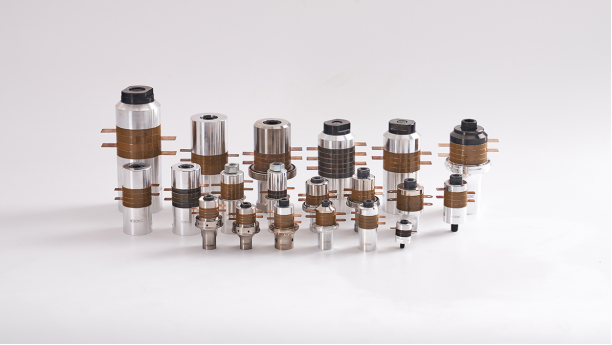
Understanding the Role of Ultrasonic Transducer in Industrial Welding
How ultrasonic transducers enhance efficiency in industrial welding applications
At the heart of today's welding systems lie ultrasonic transducers that convert electricity into those high frequency mechanical vibrations we all know so well. When these vibrations hit the materials being joined, they create enough friction at the contact points to produce localized heating without actually melting anything. What makes this solid state joining method really stand out is how quick it can be sometimes under a second per weld cycle which means factories can crank out products much faster than traditional methods allow. No need for glues, screws or any extra filler stuff either something that cuts down on both what needs to be ordered from suppliers and overall material expenses too. Factories report saving around 40% on their energy bills when switching from regular thermal welding techniques. Plus there's less risk of damaging the materials during the process so structures stay strong and reliable over time.
The science behind ultrasonic transducer operation: From electrical signals to mechanical vibrations
Ultrasonic transducers work mainly because of these special piezoelectric ceramic materials that actually change shape when electricity runs through them back and forth. Most industrial models run somewhere between 15 to 40 kilohertz frequencies, powered by those carefully adjusted electrical pulses coming out of a generator unit. What happens next is pretty interesting - these electrical signals cause the piezoelectric parts to vibrate at ultrasonic levels, and those vibrations pass right through what's called a titanium front mass. There's also some clever circuitry built into these devices that keeps everything resonating properly even if conditions change around them, whether it gets hotter or colder or whatever load they're dealing with at the moment. Finally, all those tiny movements get bigger as sound waves travel through the system, and in really good quality equipment, we're talking about conversion rates over ninety percent for turning electricity into mechanical motion.
Growing adoption of ultrasonic welding in precision industries like automotive and electronics
Ultrasonic welding has been gaining popularity fast in industries where precision matters most because it works quickly, keeps things clean, and plays well with automated processes. Car makers rely on this technique to connect copper and aluminum wires inside batteries and throughout electrical systems. For electronics companies, ultrasonic transducers allow them to attach plastic casings without messing up delicate parts inside. The medical field really appreciates how this method creates sealed connections free from particles, which is crucial for sterile environments. Aerospace engineers find it particularly useful for bonding lightweight materials together. Looking at market trends, adoption rates have jumped around 12% each year since 2020. This growth makes sense when considering stricter quality requirements plus the fact that these welding systems integrate nicely with modern manufacturing tech that tracks performance metrics and maintains product history records.
Core Features of Modern Ultrasonic Transducers for Welding Systems
Real-time frequency monitoring and overload protection for system safety
Ultrasonic welding systems today come equipped with real time frequency monitoring that keeps things running at their best resonance while operating. What this means is the system can adjust itself when frequencies start drifting because of temperature shifts or changing workload conditions, which helps keep welds looking good every single time. There are also built in safety features that watch out for problems like sudden impedance jumps or mechanical jams, shutting everything down fast to save both the transducer components and whatever material is being worked on. These kinds of protective measures really make a difference for plant managers dealing with non stop production lines where any unexpected stoppage costs money and delays shipments.
Durable piezoelectric ceramic design ensuring long operational life
At the heart of modern ultrasonic transducers we find these special piezoelectric ceramic materials that are built to last and work efficiently. What makes them stand out is their ability to maintain good electromechanical conversion rates even when running at high power levels for extended periods. We're talking about service life that often goes beyond thousands of operating hours in real world conditions. The design includes what's called a prestressed mechanical assembly which basically acts as protection against cracks forming in those fragile ceramic parts during repeated stress cycles. This feature plays a big role in keeping the transducer reliable over its lifespan and ensuring it continues producing consistent results without unexpected failures down the road.
Precision amplitude control for consistent and high-quality welds
With advanced amplitude control systems, it's possible to adjust the vibration output precisely for different materials and joint configurations. The digital interface lets operators set their desired amplitude levels and repeat them consistently within about 2% accuracy. This means there's much less variation from one shift to another, so the energy gets delivered uniformly throughout the process. As a result, welds maintain consistent strength and look good even when producing thousands of units at once. Manufacturers can count on this level of precision to meet quality requirements without constant oversight during production cycles.
Compact, modular construction enabling seamless integration into production lines
Today's transducers come with small, modular builds that make them easy to fit into automated production lines. Most models now have standard mounting points and electrical connectors that just plug right in, so when parts need replacing, there's hardly any time lost on recalibrating everything. The slim design works well even in tight spaces where older equipment would never fit, yet still leaves enough room for technicians to get at components when needed. This means less downtime overall and better flexibility for manufacturers dealing with changing production demands day to day.
Key Benefits of Ultrasonic Transducers in Plastic and Metal Welding
Energy-efficient plastic welding with minimal material degradation
Ultrasonic transducers make plastic welding work better because they turn electricity straight into mechanical vibrations that create heat right at the contact point. The heat stays focused on just what needs bonding, so thermoplastics stick together without needing extra heaters or melting everything around them. This keeps the material's original strength intact. When we look at how much power it takes compared to old school heating techniques, there's actually about a 60% drop in energy usage. What's really nice too is that this method avoids those ugly problems like color changes, warped shapes, or unwanted flash buildup. That means manufacturers get cleaner joins that hold up well, which matters a lot when making things for everyday consumers or even sensitive medical equipment.
Clean, fast joining in metal welding without filler materials or excessive heat
When working with metal welding, ultrasonic transducers form solid state connections by applying high frequency vibrations while pressure is maintained, all happening at temperatures way below what would melt the actual base metals involved. What makes this method stand out is that there's no requirement for extra filler material, flux substances, or those protective shielding gases commonly used in other methods. The result? Joints that are free from oxides and completely without any spatter issues. Typically these welds take between just 0.1 and 0.5 seconds to complete which means they can be up to five times quicker compared to conventional approaches. For applications involving sensitive electronics parts or when manufacturing batteries at speed, this becomes particularly valuable since both situations demand strict avoidance of contaminants and potential heat related damage to surrounding areas.
Reduced thermal distortion compared to traditional welding methods
When ultrasonic transducers focus their energy right at the weld point, they actually shrink the area affected by heat and stop excessive thermal expansion from happening. The result? Parts stay dimensionally stable with much less warping, so nobody has to spend time fixing them after welding. Some shops have seen as much as an 80 percent drop in needing to redo work on those really important parts used in cars and planes. These industries demand super tight tolerances and reliable structures, so anything that cuts down on waste is huge for production efficiency.
Working Principle and System Integration of Ultrasonic Transducers
Mechanics of ultrasonic welding: How high-frequency vibrations create strong bonds
Ultrasonic welding works by creating really strong bonds when high frequency vibrations are applied with pressure on materials like thermoplastics or thin metal sheets. What happens at the point where they come together is pretty interesting actually. The vibrations create friction which generates heat, allowing molecules to diffuse and lock into place without fully melting everything down. For plastic parts, we get what's called a homogeneous fusion. With metals though, it results in something known as a solid phase metallurgical bond. Since there's no actual melting going on during this process, the resulting joints stay clean and sturdy while having minimal residual stress. That makes ultrasonic welding especially good for things that need both high purity levels and structural strength, think medical equipment components or delicate electronic assemblies where traditional methods might cause problems.
Transducer function in energy conversion: Turning electricity into mechanical vibration
At the heart of the system lies the ultrasonic transducer, which acts as the main device for converting electrical signals into mechanical movement through what's called the piezoelectric effect. Apply some alternating voltage to these special ceramic components and they start to change shape on a microscopic level, typically vibrating somewhere between 20 thousand and 40 thousand times per second. All those tiny expansions and contractions get transferred through mechanical parts that boost them up until we have actual ultrasonic waves ready for work. Today's models manage to convert electricity to motion with efficiencies exceeding 90%, something that makes all the difference when trying to maintain consistent weld quality across production runs.
Integration with booster and horn: Achieving optimal amplitude transmission
Getting good welds means controlling amplitude just right, and that's where the whole transducer-booster-horn setup comes into play. The booster part works by adjusting those vibrations according to mechanical gain principles. Basically, it can either make them bigger or smaller depending on what the job actually needs. Then there's the horn, sometimes called a sonotrode, which takes those carefully adjusted vibrations and applies them exactly where they need to go on the material being worked on. These components come in all sorts of shapes and sizes too. Most systems have gain ratios somewhere between 1:1 and 2.5:1. What makes this whole package so useful is how adaptable it is. Some folks use it for tiny electronic parts while others tackle big automotive pieces without changing much at all.
Electrical impedance matching for efficient power delivery and system reliability
Getting efficient power transfer between the generator and transducer really comes down to matching electrical impedances properly. When systems aren't matched right, they end up reflecting back energy which leads to all sorts of problems including loss of power, unstable frequencies, and sometimes even damage to those sensitive piezoelectric parts. These days most modern equipment has built in features like automatic frequency tracking alongside these smart impedance matching networks that keep adjusting themselves while running to stay in tune. Such improvements not only make things run better but also cut down heat buildup inside the components. Research from the Precision Engineering Journal last year showed that this kind of system can actually double the life expectancy of transducers in some cases, though results do vary depending on specific applications and conditions.
Performance Monitoring and Reliability in Industrial Ultrasonic Transducers
Advanced monitoring systems: Real-time feedback for stable transducer performance
Modern ultrasonic transducers come with built-in sensors that give operators immediate information about things like frequency levels, power consumption, temperature changes, and how loud the sound waves actually are. When these sensors constantly watch what's happening, they catch problems before they get bad. For instance, if the amplitude starts dropping off or the impedance goes up, that usually means something is wearing out or not aligned properly. What makes this really useful is how it turns those ultrasonic signals into actual health indicators for the equipment. This lets factories plan maintenance when it's needed instead of waiting until something breaks down completely. Plus, when these systems connect smoothly to existing factory networks, everyone can track everything back through the production process. That matters a lot in places like medical device manufacturing where consistent weld quality isn't just nice to have but absolutely required.
Balancing high power output with component longevity and wear management
Getting the most out of transducers means finding that sweet spot between needing lots of power and wanting them to last for ages. When it comes down to it, good thermal management along with those precisely machined parts helps keep stress off those sensitive piezoelectric ceramics when they're running nonstop. The smart control systems these days actually adjust how much power gets sent where depending on what kind of welding needs there are, which cuts down on wear and tear inside the machine itself. Companies that manage this wear properly report their transducers lasting around 40 percent longer than ones without monitoring. That translates into fewer replacements needed and better productivity across the board, especially important in factories where machines run flat out all day long.
FAQ
What is an ultrasonic transducer?
An ultrasonic transducer is a device used in welding applications to convert electrical energy into high-frequency mechanical vibrations that facilitate material joining without melting.
How do ultrasonic transducers benefit industrial applications?
They enhance efficiency by speeding up weld cycles, reducing material costs, and saving energy expenses. They also allow precision welding, maintain material strength, and integrate well with automation.
What materials are commonly used in ultrasonic transducers?
The main components include piezoelectric ceramic materials that change shape when exposed to electricity, primarily used to produce ultrasonic vibrations.
Why is ultrasonic welding popular in precision industries?
Ultrasonic welding is favored because it works quickly, maintains cleanliness, and can be easily integrated into automated systems, meeting strict quality requirements while ensuring efficient production.
Table of Contents
- Understanding the Role of Ultrasonic Transducer in Industrial Welding
- Core Features of Modern Ultrasonic Transducers for Welding Systems
- Key Benefits of Ultrasonic Transducers in Plastic and Metal Welding
-
Working Principle and System Integration of Ultrasonic Transducers
- Mechanics of ultrasonic welding: How high-frequency vibrations create strong bonds
- Transducer function in energy conversion: Turning electricity into mechanical vibration
- Integration with booster and horn: Achieving optimal amplitude transmission
- Electrical impedance matching for efficient power delivery and system reliability
- Performance Monitoring and Reliability in Industrial Ultrasonic Transducers