
 EN
EN
How Ultrasonic Atomization Revolutionizes Metal Powder Production
Core Physics: Cavitation, Melt Fragmentation, and Spherical Particle Formation
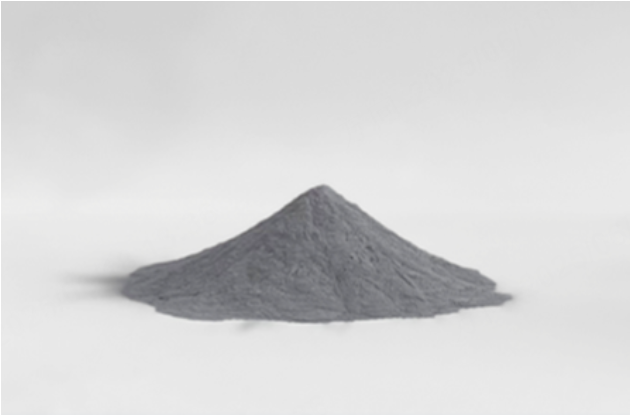
Ultrasonic atomization turns molten metal into high quality spherical powders through the use of high frequency sound waves ranging from 20 to 200 kHz. When energy gets coupled into the melt, it creates controlled cavitation effects where tiny vapor bubbles form and then collapse with intense localized pressure. These collapses break the liquid metal apart into fine droplets of consistent size. What happens next is pretty fascinating: surface tension acts on each droplet as they cool rapidly inside an inert gas environment, shaping them into nearly perfect spheres. Compared to traditional gas atomization techniques, ultrasonic methods sidestep those problematic turbulent shear forces which often lead to satellite particles, odd shapes, and internal voids in the final product. The result? Sphericity rates exceeding 95% with flow characteristics better than 25 seconds per 50 grams. Another major advantage comes from eliminating mechanical nozzles altogether, which cuts down on contamination issues. Manufacturers regularly report oxygen content staying below 100 parts per million here, about half what's typical with older production approaches.
Critical Process Parameters: Frequency, Power Density, and Melt Viscosity Control
Powder quality hinges on three tightly coupled parameters:
- Frequency: Higher frequencies (≥100 kHz) generate finer droplets (10–50 μm), ideal for laser powder bed fusion; lower frequencies favor coarser, denser powders for thermal spraying.
- Power density: Optimal range is 50–150 W/cm²—sufficient to sustain stable cavitation without excessive melt vaporization or splashing.
- Melt viscosity: Directly influenced by temperature precision (±5°C control); lower viscosity enables smoother, more uniform fragmentation.
Real-time monitoring and dynamic adjustment of these variables maintain particle size distribution (PSD) within ±3% deviation. For reactive alloys like titanium, targeted melt superheat adjustments compensate for viscosity shifts—reducing scrap by 30% and enabling consistent production across diverse feedstocks, including recycled scrap and failed 3D prints.
Ultrasonic Metal Powder Making Equipment: From Lab to Industry
ATO Lab Plus and ATO Noble: Design Evolution for Reproducible, High-Quality Metal Powder
The early versions of ultrasonic systems worked well in labs but just couldn't be replicated consistently at an industrial level. Today's platforms like the ATO Lab Plus and ATO Noble have come a long way though. They incorporate frequency modulation that allows fine control over particle size distribution. The machines also feature sealed chambers filled with inert gases keeping oxygen levels under 50 parts per million. Plus there's this closed loop system that regulates melt viscosity throughout the process. All these improvements result in powders that are free from satellites and perfectly spherical, with only about 3% variation between batches. That's a huge leap forward compared to those first models which had variations around 15%. What makes these systems really stand out is their support for circular material flows. Scrap metal and waste from additive manufacturing can actually be recycled right back into production without losing any of their key properties like sphericity or flow characteristics. And we've tested this thoroughly using both ASTM B213 and ISO 4490 standards to confirm everything works as claimed.
Performance Benchmarking: PSD Uniformity, Sphericity, and Oxygen Content vs. Conventional Methods
Ultrasonic atomization sets new benchmarks across three foundational powder metrics:
| Parameter | Ultrasonic Atomization | Gas Atomization | Water Atomization |
|---|---|---|---|
| PSD Uniformity (D90/D10) | 1.2–1.5 | 1.8–2.5 | 2.5–3.8 |
| Avg. Sphericity | >0.95 | 0.88–0.92 | 0.75–0.82 |
| Oxygen Content (ppm) | 80–200 | 200–500 | 800–2000 |
Narrow particle size distribution comes from deterministic cavitation forces instead of random turbulence effects. High sphericity indicates uniform surface tension during solidification processes. When using sealed processing methods, oxidation simply doesn't happen. Tests with micro CT scans and density measurements show that ultrasonic powders reach about 98% of theoretical density in laser powder bed fusion builds. Compare this to gas atomized materials which typically hit around 92 to 95%. This difference means manufacturers can save roughly 30% on post processing time, making production cycles much faster overall.
Why Ultrasonically Produced Metal Powder Excels in Advanced Applications
Additive Manufacturing: Flowability, Packing Density, and Defect Reduction in AM Feedstock
Ultrasonic metal powders have been specifically developed for use in additive manufacturing applications. With their near-perfect spherical shape (over 0.95 sphericity index) and tightly controlled particle size distribution where D90/D10 ratio stays below 1.5, these powders flow much better when applied during the recoating process. This helps prevent issues like powder bridging and those frustratingly uneven layers that can ruin prints. The unique shape actually packs about 15 to 20 percent denser than regular gas atomized powders, which means fewer gaps between layers and better heat transfer when the material melts. Studies using micro CT scans found around 30% reduction in defects such as those pesky lack of fusion pores and tiny cracks, thanks to how consistently the melt pools form. And since these powders contain less than 100 parts per million oxygen, there's significantly fewer oxide inclusions that would otherwise weaken the final product over time. For this reason, many aerospace manufacturers rely on them for critical components that need to meet strict requirements outlined in standards like AMS 7028 and ASTM F3049.
Beyond AM: High-Performance Bearings, Thermal Spraying, and Porous Structures
These benefits show up all over different industrial sectors. Take high speed bearings for instance satellite free surfaces cut down friction by around 40 percent which means parts last much longer even when subjected to intense heat and pressure conditions. When it comes to thermal spraying processes, having tight control over particle size distribution makes a big difference. The result? Coatings that reach densities above 99% and stand up better against corrosion problems in harsh environments like offshore oil platforms. Moving into medical tech fields, ultrasonic technology creates special porous titanium structures where the tiny holes between 50 to 200 micrometers connect throughout the material. Real world tests have found that these implants promote about 35% more bone growth compared to traditional methods. This improvement happens because ultrasonic atomization delivers both consistent quality and pure materials right from the start.
Emerging Innovations Accelerating the Adoption of Ultrasonic Metal Powder Technology
AI-Driven Real-Time Process Control and Closed-Loop PSD Optimization
The latest ultrasonic systems now incorporate AI control loops capable of analyzing things like high speed imaging, acoustic emissions, and melt behavior as it happens. These machine learning algorithms can tweak frequencies and power levels while the process is running, which helps combat issues like unexpected changes in viscosity or temperature fluctuations. According to some tests, this approach cuts down on particle size distribution problems by around 40% when compared to what humans could manage manually. What makes this really valuable is that manufacturers no longer have to rely on expensive post-processing steps like sieving or reworking materials. The result? Higher production yields and consistent quality even when working with large batches measured in kilograms rather than grams.
Multi-Material & Reactive Alloy Capabilities: Expanding the Metal Powder Portfolio
The latest ultrasonic tech can handle those tricky reactive alloys that just wouldn't work with traditional atomization methods before. We're talking about stuff like aluminum-scandium mixtures, titanium-copper combinations, and even magnesium-lithium systems that used to be impossible to process properly. What makes this possible? Well, the system creates an inert atmosphere where things cool down super fast within milliseconds. This prevents oxidation problems and stops different metals from separating out during processing. The result? Powders with oxygen levels below 100 parts per million and hardly any unwanted intermetallic stuff getting mixed in. All these improvements are creating exciting opportunities across several fields. Manufacturers are starting to develop lighter weight bearings for airplanes, better conducting materials for heat management applications, and even implants that dissolve safely in the body over time. Most importantly, all these products meet strict industry standards set forth by organizations like ASTM and ISO, ensuring they perform exactly as required when put into actual service.
FAQ
What is ultrasonic atomization?
Ultrasonic atomization is a technique that uses high-frequency sound waves to turn molten metal into fine spherical powders, with high precision and minimal contamination.
Why is sphericity important in metal powders?
High sphericity ensures a uniform shape of metal particles, which improves flow characteristics during manufacturing and reduces the risk of defects in the final product.
How does ultrasonic atomization compare to traditional methods?
Ultrasonic atomization results in finer powders with less oxygen content and better particle uniformity compared to traditional gas or water atomization methods.
What are the applications of ultrasonically produced metal powders?
These powders are used in additive manufacturing for aerospace, medical implants, high-performance bearings, and thermal spraying, among other applications.
Can ultrasonic atomization process reactive alloys?
Yes, the technology is capable of processing reactive alloys such as aluminum-scandium and titanium-copper by maintaining an inert atmosphere that prevents oxidation.