
 EN
EN
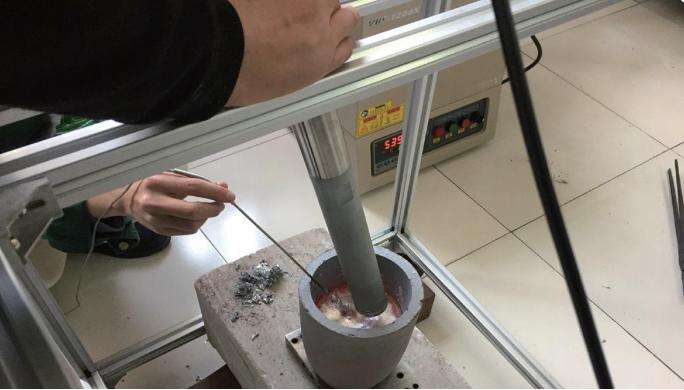
Ultrasonic Atomization: A Precision Method for High-Quality Metal Powder Production
Mechanism of Molten Metal Breakup via High-Frequency Vibration
The process known as ultrasonic atomization turns molten metal into those nice round particles we need by using high frequency vibrations between 20 and 100 kilohertz. What happens is these vibrations create tiny wobbles on the surface of the liquid metal. These disturbances break through the surface tension, creating thin strands that snap off and harden into little droplets around 10 to 50 micrometers in size. This works especially well with materials like SAC305, which is commonly used in lead free solders. Compared to methods that blow stuff apart with gas, ultrasonic atomization works differently because it only needs mechanical energy. When the vibrations get strong enough to push past what the metal can handle, the droplets form consistently without needing any extra pressure from outside sources. By adjusting the frequency, manufacturers can control exactly what size most of the particles end up being (this is called D50). This means they can tweak things on the fly during production runs for 3D printing powders without having to replace equipment or stop the whole process.
Advantages Over Conventional Methods for Lead-Free Solder Alloys (e.g., SAC305)
When it comes to making solder metal powder, ultrasonic atomization stands out compared to traditional gas and centrifugal methods. One major benefit? No need for all those expensive compressed gas systems anymore. Energy consumption drops dramatically too, somewhere between 40 to 60 percent less than what gas atomization requires. Without those powerful gas jets causing turbulence, there's no thermal shock either. This means alloys stay homogeneous throughout production and we avoid problems like tin segregation that plague sensitive materials such as SAC305. Plus, oxidation gets controlled without needing vacuum equipment at all. Oxygen levels stay rock bottom around 0.3 weight percent when working with inert gases. Industry tests from 2025 showed these systems achieve about 52% material efficiency, matching what industrial gas atomizers can do. But here's the kicker: they work great for smaller batches too, which makes them perfect for developing specialty alloys where flexibility matters most.
Metal Powder Particle Size Control and Distribution Uniformity
Achieving Target D50 and Narrow PSD Through Amplitude, Feed Rate, and Nozzle Geometry Tuning
Getting good control over D50 measurements and how particles are sized (PSD for short) really depends on three main factors working together: how much the system vibrates, how fast the molten metal flows into the process, and what shape the nozzle is. When we crank up the vibration amplitude, it gives us more cavitation energy which makes the D50 measurement move towards smaller particle sizes. Slowing down the feed rate helps create more uniform droplets since there's time for those ligaments to fully develop before they break off. The size of the nozzle opening and its taper angle have a big impact on how wide the PSD ends up being. We've found that tapered nozzles actually reduce turbulence in the flow, so we get much tighter distributions. With SAC305 alloys, when everything is set just right, we can hit D50 values anywhere from 15 to 45 microns with a PSD spread staying within about plus or minus 10 microns. This kind of tight control makes the powder flow better by around 25 to 30 percent compared to what we see with gas atomization methods. Better flow means improved solder paste consistency and much cleaner results during stencil printing operations in electronic assembly shops.
Influence of Inert Atmosphere (N₂ vs. Ar) on Agglomeration and Oxidation During Metal Powder Formation
The choice of atmosphere makes a big difference when it comes to how oxides form and how particles stick together. Argon has some advantages over nitrogen because it's denser and doesn't spread out as easily. This means there's about 40% less oxygen getting picked up compared to using nitrogen, which keeps oxide levels under control at around 0.1 weight percent in those tin-rich solder materials. What's interesting is that argon's inert nature basically stops surfaces from reacting so much, and this cuts down on clumping problems by roughly the same 40% figure we saw earlier in SAC305 powder processing. When looking at aerospace quality requirements, argon stands out since it stops nitrides from forming even when melts reach temperatures around 300 degrees Celsius, something that helps maintain those nice round shapes we want. For copper alloys that aren't quite so sensitive to oxygen, nitrogen still works pretty well as long as oxide levels stay above 0.3 weight percent, and manufacturers can save between 15 and 20 percent on costs this way.
Key atmosphere comparison:
| Parameter | Nitrogen (N₂) | Argon (Ar) |
|---|---|---|
| Oxygen Pickup | 0.25 wt% | 0.08 wt% |
| Agglomeration | Moderate (15–20%) | Low (<5%) |
| Cost Impact | 15–20% savings | 25–30% premium |
Morphology and Chemical Integrity: Sphericity and Oxygen Content in Solder Metal Powder
Optimizing Melt Temperature and Nozzle Design for ≥92% Sphericity in SAC305 Metal Powder
To get SAC305 powder with high sphericity (at least 92%), manufacturers need to carefully balance melt temperature and nozzle design. When temperatures go above 280 degrees Celsius, the material tends to break apart prematurely and form unwanted satellites. On the flip side, if it's too cold, below 250 degrees, the increased viscosity makes it hard for droplets to separate cleanly from each other. Keeping things within the 250 to 280 degree range allows surface tension to take charge as the main shaping factor during quick solidification. Switching to tapered nozzles instead of regular cylindrical ones cuts down on turbulent flow patterns, which actually improves sphericity by around 15 to 20 percent. These almost perfectly round particles pack together better than irregular shapes, reaching density levels above 60%. This matters a lot for solder paste applications where consistent volume distribution and accurate deposition are critical for quality electronic assemblies.
Oxygen Control Strategies to Ensure Low Oxide Content (<0.3 wt%) in Final Metal Powder
Getting oxide levels below 0.3 weight percent requires more than just picking the right atmosphere for processing. Argon actually cuts down on oxygen getting into the material about 40% better than nitrogen because it's heavier molecules don't let oxygen pass through so easily. But what really keeps things under control is when systems monitor oxygen levels in real time (around 50 parts per million is the danger zone) and automatically kick in vacuum purges when needed. Special ceramic coatings on nozzles help too since they reduce how long molten metal stays exposed to air. And faster cooling speeds mean there's less time for oxidation to happen at all. When combined with keeping moisture super low (less than 10 parts per million water vapor), these different approaches work together to make sure solder sticks properly and avoids those weak spots where joints break in electronic components.
Balancing Performance, Scalability, and Efficiency in Industrial Metal Powder Manufacturing
For industrial manufacturers, finding the sweet spot between high quality metal powders, large scale production, and efficient operations is no small challenge. Ultrasonic atomization actually checks off all these boxes at once. The system's control setup lets operators keep those critical D50 and PSD measurements consistent whether they're running small test batches or full scale production. When things get hot during processing or when production speeds change, simple tweaks to amplitude settings and feed rates help maintain quality standards throughout. What really stands out though is how much energy this process saves compared to traditional methods. We're talking around 40% less energy needed per pound of material produced because electricity goes straight into the process without wasting heat along the way. Plus, there's ongoing improvements in managing the inert gas flow which cuts down on overall resource consumption even more.
Narrow PSDs also drive sustainability downstream: precise particle engineering enables >95% powder utilization in paste mixing and additive manufacturing—reducing waste and supporting green certifications. Consistent morphology and chemistry minimize rework cycles, accelerating throughput while preserving metal powder integrity across high-volume operations.
FAQ
What is ultrasonic atomization?
Ultrasonic atomization is a process using high-frequency vibrations to turn molten metal into tiny, round particles, particularly useful in producing metal powders for applications such as 3D printing.
How does ultrasonic atomization differ from traditional gas atomization methods?
Ultrasonic atomization uses mechanical energy without needing compressed gas, reducing energy consumption by up to 60% and limiting thermal shock, making it ideal for producing homogeneous alloys.
Why is the choice of atmosphere important in metal powder formation?
The choice of atmosphere, such as argon or nitrogen, affects oxygen pickup and agglomeration during powder formation, influencing the quality and cost-effectiveness of production.
How does nozzle design impact the quality of metal powders produced?
Nozzle design, including its shape and taper, significantly affects particle size distribution and sphericity by controlling flow turbulence and droplet separation.
Can ultrasonic atomization handle smaller production batches efficiently?
Yes, ultrasonic atomization is highly scalable, making it suitable for both large-scale production and smaller specialty alloy batches.
Table of Contents
- Ultrasonic Atomization: A Precision Method for High-Quality Metal Powder Production
- Metal Powder Particle Size Control and Distribution Uniformity
- Morphology and Chemical Integrity: Sphericity and Oxygen Content in Solder Metal Powder
- Balancing Performance, Scalability, and Efficiency in Industrial Metal Powder Manufacturing
- FAQ