
 EN
EN
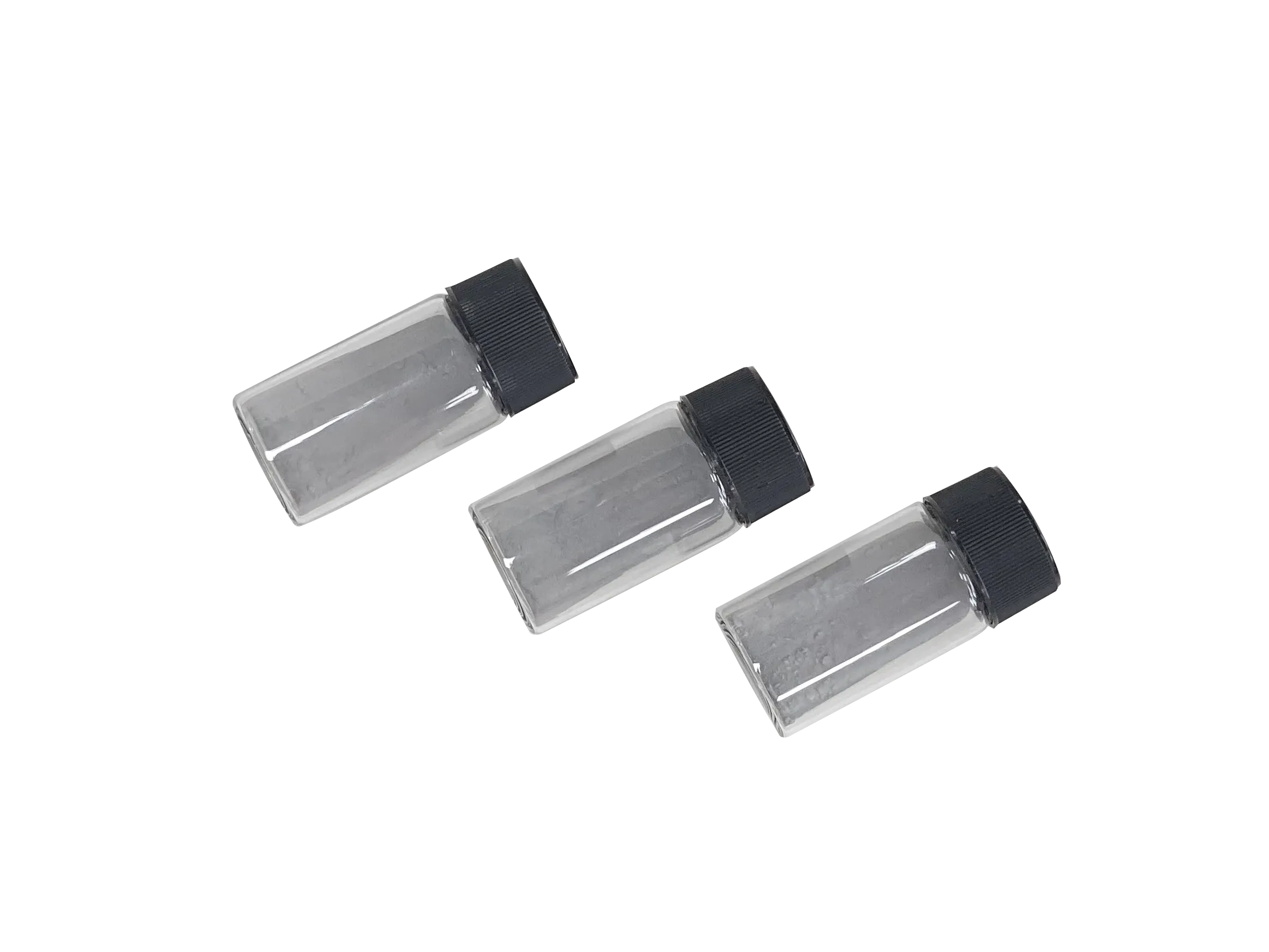
How Ultrasonic Metal Powder Making Equipment Produces High-Performance Welding Powders
Mechanism: Cavitation-driven fragmentation and in-situ oxide suppression for spherical, low-oxygen metal powder
Ultrasonic metal powder equipment works by sending out these really high frequency sound waves, usually somewhere around 20 to 50 kilohertz, which creates controlled cavitation inside molten metals. What happens next is pretty interesting. These sound waves form tiny vacuum bubbles that burst apart quite forcefully. When they break, they fragment the molten metal stream into nice uniform spheres at the same time as preventing oxidation on the surface because of all that intense movement around each particle. The way this technology operates actually manages to keep oxygen content under 0.15 weight percent, which cuts down on oxidation by about 60% compared to what we see with traditional gas atomization methods. And here's another plus point over regular mechanical milling techniques. Since there's no physical contact involved, the material stays intact throughout the process. We end up with particles that are free from satellites and optimized for flow characteristics, measuring between 15 and 150 micrometers across. This makes them particularly well suited for consistent delivery in both automated welding operations and various additive manufacturing setups where uniformity matters most.
Material Impact: Enhanced flowability, packing density, and oxidation resistance in Ti-6Al-4V and Inconel 718 powders
Ultrasonic processing really boosts performance when working with aerospace grade materials. Take Ti-6Al-4V powders for instance they show around 28% better Hall flow compared to what we get from rotary atomization methods. The packing density hits well over 65% of theoretical maximum too, which means our weld deposits end up much denser with porosity staying below 0.2%. When it comes to Inconel 718, the results are just as impressive. These powders have that nice spherical shape and clean surfaces free from oxides. They hold up against oxidation even at temperatures reaching 980 degrees Celsius through hundreds of thermal cycles something regular powders simply can't match. All these improvements make a real difference in how welded joints perform in actual applications.
- 15% higher ultimate tensile strength in titanium welds
- Threefold reduction in intergranular cracking for nickel superalloys
- Consistent bead geometry and reduced spatter in wire-arc additive manufacturing (WAAM)
Integration of Ultrasonic Metal Powder Processing into Advanced Welding Workflows
Process Synergy: From ultrasonic powder synthesis to ultrasonic-assisted compaction and weld interface activation
Ultrasonic processing creates a smooth workflow from start to finish when working with raw alloys all the way through to final welding results. The process starts off with something called cavitation driven powder synthesis which makes spherical feedstock particles that contain very little oxygen. What happens next? Well those same powders get compacted under ultrasonic vibrations into dense preforms that are pretty uniform throughout while keeping contamination levels really low because there's not much manual handling involved. When it comes time for actual welding, the ultrasonic energy kicks in at the interface points. This helps break down oxide layers on surfaces, allows better wetting action between materials, and actually promotes good metal bonding without creating those pesky brittle intermetallic compounds we all want to avoid. Overall this whole integrated method cuts down on contact with regular air oxygen, makes the whole process more consistent, and means production runs tend to produce similar quality results batch after batch.
System Innovation: Dual-mode ultrasonic platforms enabling powder-to-preform-to-joint manufacturing continuity
Dual mode ultrasonic systems bring together powder making, compacting, and welding all within one programmable setup. These systems keep the same frequency levels, amplitude settings, and energy output throughout each stage of production. This helps get rid of those annoying efficiency losses between steps and also cuts down on contamination problems that can happen when switching equipment. The whole process works smoothly from raw powder straight through to finished parts, which means shorter wait times for products, less waste material overall, and generally lower power consumption than traditional methods that require multiple separate machines. We see these kinds of systems being used increasingly in high tech industries like aerospace manufacturing and nuclear component fabrication, where keeping track of every detail matters and getting the right microscopic structure in materials is absolutely essential for safety reasons.
Tangible Welding Performance Gains Enabled by Ultrasonically Processed Metal Powder
When using ultrasonically treated powders, there's a noticeable boost in both weld quality and how well components perform during service. Weld joints created from these materials often achieve around 30% greater tensile strength because the particles are so uniform, contain less than 0.1% oxygen, and don't have those pesky satellite particles or oxide formations. For titanium welds specifically, porosity issues decrease by about 40%, while cracks form less frequently in nickel based superalloys by roughly 25%. The strict control over particle size between 15 and 45 microns makes feeding material into robotic GMAW and WAAM systems much smoother without spatter problems, which means better accuracy when depositing material and fewer times needing to fix things later. What really stands out though is how clean the particle surfaces stay free from oxides, allowing strong bonds to form even when joining different metals together like aluminum to copper connections that would normally be tricky without creating brittle layers at the interface. This results in welds lasting more than 50% longer under repeated stress tests, plus they need far less work after welding such as machining or inspections, ultimately cutting down on overall costs for expensive applications where reliability matters most.
FAQ
What is ultrasonic metal powder making equipment?
Ultrasonic metal powder equipment uses high-frequency sound waves to create controlled cavitation within molten metals, resulting in uniform spherical particles with low oxygen content and reduced oxidation compared to traditional methods.
How does ultrasonically processed metal powder improve welding quality?
Ultrasonically processed powders enhance welding quality by producing particles with low oxygen content and free from satellites or oxides, which results in stronger welds with less porosity and cracking.
Why is ultrasonic processing advantageous for aerospace materials?
Ultrasonic processing enhances flowability, packing density, and resistance to oxidation, making it ideal for aerospace materials like Ti-6Al-4V and Inconel 718, leading to improved performance in high-temperature and demanding environments.
What are the benefits of using dual-mode ultrasonic systems?
Dual-mode ultrasonic systems integrate powder making, compaction, and welding into one programmable setup, minimizing efficiency losses, contamination, and reducing overall material waste and power consumption.