
 EN
EN
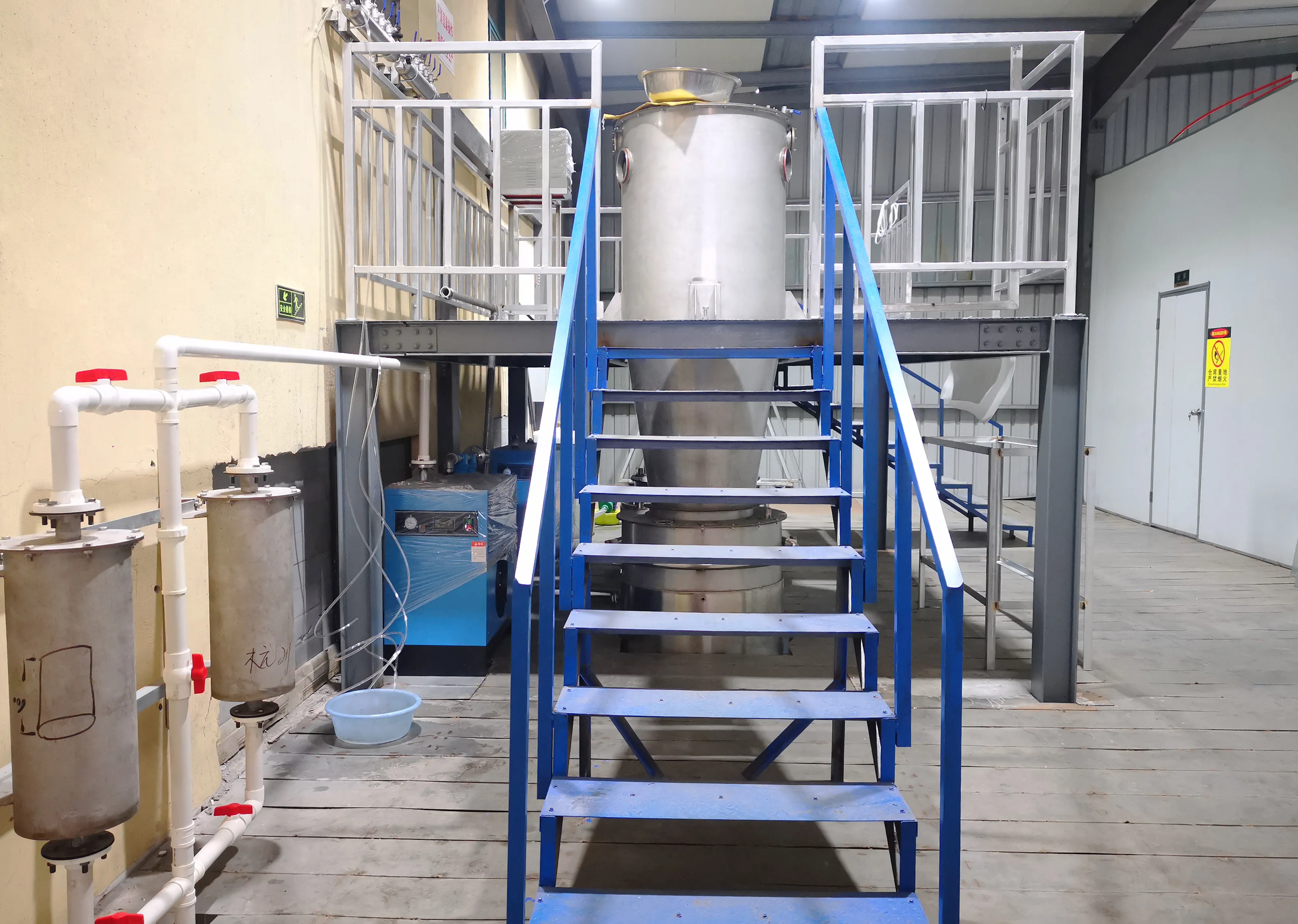
How Ultrasonic Atomization Delivers Superior Metal Powder Quality
Ultrasonic atomization works by using those high frequency vibrations between 20 and 100 kilohertz to create these little capillary waves right on top of molten metal. What happens next is pretty interesting. Once those waves get big enough past some kind of critical point, tiny droplets just pop off because of this thing called capillary instability. These droplets then solidify super fast, we're talking within milliseconds here, all while sitting in an inert atmosphere where temperatures drop at an amazing rate over a million Kelvin per second. Because everything happens so quickly during this phase change, there's no time for those annoying dendrites to form or for oxidation to occur. The result? Metal particles that are almost perfectly round, with most of them having sphericity above 95%, which makes them flow really well when used in additive manufacturing processes.
Physics of Droplet Formation: Capillary Wave Breakup and Rapid Solidification
When ultrasonic waves hit molten metal surfaces, they create these interesting capillary instabilities that basically make the surface unstable. As those waves get stronger, something called Rayleigh-type breakup happens, breaking the surface apart into pretty uniform droplets. What makes this process special is how those droplets harden so quickly inside specially designed inert chambers. This rapid solidification keeps them nice and round, which stops problems like oxides getting mixed in or uneven distribution of materials within the metal. Looking at it under EBSD analysis shows consistent microstructures from batch to batch. And according to research published in scientific journals, this ultrasonic method cuts down oxide inclusions by more than 80% when compared with traditional gas or plasma atomization techniques. That means parts made using this approach generally have better fatigue resistance and stronger tensile properties overall.
Key Metrics: >95% Sphericity and Tight Particle Size Distribution (d90/d10 < 2.0)
The quality of metal powders really comes down to two main factors working hand in hand: first, particles need to be almost perfectly spherical, ideally over 95% roundness. Second, there should be very little variation in particle sizes across the batch, measured by something called the d90/d10 ratio which needs to stay below 2.0 for best results. When powders have good sphericity, they flow smoothly through PBF machines and spread evenly across the build platform. A tight particle size distribution matters too because it prevents clumping when layers are deposited, allowing the material to pack together densely enough to reach nearly 99.5% of what theory predicts. These combined properties mean fewer holes form inside printed parts, making them stronger overall. Real world tests back this up - manufacturers report that components made with such high quality powders tend to last about 30% longer before showing signs of failure, especially important for critical aerospace components where reliability counts.
Oxidation Control for Reactive Metal Powder Production
Keeping oxygen levels really low matters a lot when working with reactive alloys such as Ti-6Al-4V and Inconel 718. Our system keeps those oxygen levels down to under 50 parts per million during all stages from melting right through to collecting the material. That's way better than what most traditional methods can manage, which usually hover around 200 to 500 ppm. We accomplish this by using constant pressure from argon gas, moving materials through several airlocks, and constantly checking oxygen content with lasers at twelve key spots across the operation. These checks happen every half second too. When sensors detect anything off track, they automatically kick in cleaning cycles to maintain the quality of the material right down to the atomic level. This prevents the formation of brittle oxides that would otherwise weaken the metal and shorten how long it lasts under stress.
Inert Atmosphere Integration and Real-Time Oxygen Monitoring (<50 ppm)
The full production line operates under rigorously maintained argon environments, validated by ISO/IEC 17025-accredited oxygen analyzers. According to 2024 powder metallurgy studies published in International Journal of Powder Metallurgy, this continuous monitoring approach delivers 80–92% greater oxygen reduction than traditional batch purging methods—without increasing cycle time or operational complexity.
Microstructural Preservation in Ti-6Al-4V and Inconel 718 Powders
When working with titanium alloys, keeping oxygen levels under 100 ppm is essential if we want to avoid alpha-case formation problems. Nickel superalloys require similarly strict control since excess oxygen can lead to unwanted carbide precipitation when these materials go through thermal processing steps. What makes our approach stand out? We successfully maintain the equiaxed beta phase grain structure in Ti-6Al-4V while ensuring even distribution of elements throughout Inconel 718 samples. This has been confirmed through electron backscatter diffraction analysis as well as tests following ASTM F3001 standards. The end product is powder material suitable for those really important aerospace components and medical implants where the microscopic structure determines whether parts pass quality checks or get rejected outright.
Scalable Metal Powder Manufacturing: From Lab to Full-Scale Production
Moving ultrasonic atomization from small lab batches (around 1 kg per day) to full industrial production (multiple tons per month) is no easy task. We need to keep those essential quality features intact while still getting good throughput. Our approach combines modular nozzle setups, carefully timed inert gas protection, and smart droplet monitoring systems that let us scale up smoothly. These techniques help maintain particle shape above 95% spherical and keep size distribution ratios below 1.8 throughout different production volumes. Traditional approaches often run into problems when scaling up, with oxidation issues or wider particle size distributions becoming common. But our system maintains stable atomization conditions even during transitions. The result? Production costs drop about 30 to 40 cents per kilogram, and what used to take years of testing now gets done in just a few months. This makes it much easier for industries with strict regulations like defense contracting and medical implant manufacturers to adopt this technology faster.
Critical Applications Enabled by High-Performance Metal Powder
Additive Manufacturing: Flowability, Density, and Fatigue-Resistant Microstructures
Industrial additive manufacturing relies heavily on high purity spherical metal powders, especially when it comes to powder bed fusion techniques. The right flow characteristics are essential for getting consistent layering during printing processes. Packing density matters too - anything over 60% helps reduce those pesky voids that can compromise final products. And then there's the oxygen content issue. For reactive metals, keeping it below 50 parts per million makes all the difference in preventing brittle failures down the road. Look at critical components like airplane turbine blades, aircraft landing gear systems, or even medical spinal implants where material integrity counts for everything. These quality parameters actually result in impressive performance metrics. We're talking about tensile strengths exceeding 1,200 megapascals and fatigue life extending by around 30 to 50 percent compared to traditionally made counterparts. That kind of improvement explains why so many industries are making the switch to these advanced manufacturing methods.
| Property | AM Requirement | Impact on Performance |
|---|---|---|
| Sphericity | >95% | Ensures smooth recoating and density |
| PSD Ratio (d90/d10) | <2.0 | Prevents segregation during printing |
| Oxygen Content | <50 ppm for reactive alloys | Eliminates embrittlement in final parts |
Rapid solidification inherent to ultrasonic atomization eliminates satellite particles and irregular grains—key contributors to crack initiation in PBF-LB processes. This consistency supports regulatory acceptance in high-assurance industries, enabling AM’s expansion into safety-critical systems governed by AS9100, ISO 13485, and NADCAP standards.
FAQ
What is ultrasonic atomization in metal powder production?
Ultrasonic atomization is a process where high-frequency vibrations create capillary waves on molten metal. These waves lead to the formation of droplets that solidify rapidly, resulting in superior quality metal powders with high sphericity and low oxidation levels.
Why is sphericity important in metal powders?
Sphericity ensures that metal powders flow smoothly through additive manufacturing machines, allowing for even layering and reducing voids in the final product, which leads to stronger and more reliable components.
How does ultrasonic atomization reduce oxidation in metal powders?
By conducting the atomization process in an inert atmosphere with real-time oxygen monitoring, the technique reduces oxygen levels in reactive alloys to below 50 ppm, preventing the formation of brittle oxides and enhancing the material's lifespan.
Can ultrasonic atomization be used for mass production?
Yes, ultrasonic atomization can be scaled from laboratory-sized batches to industrial-scale production while maintaining quality. The process involves modular nozzle setups and inert gas protection to manage larger volumes efficiently.