
 EN
EN
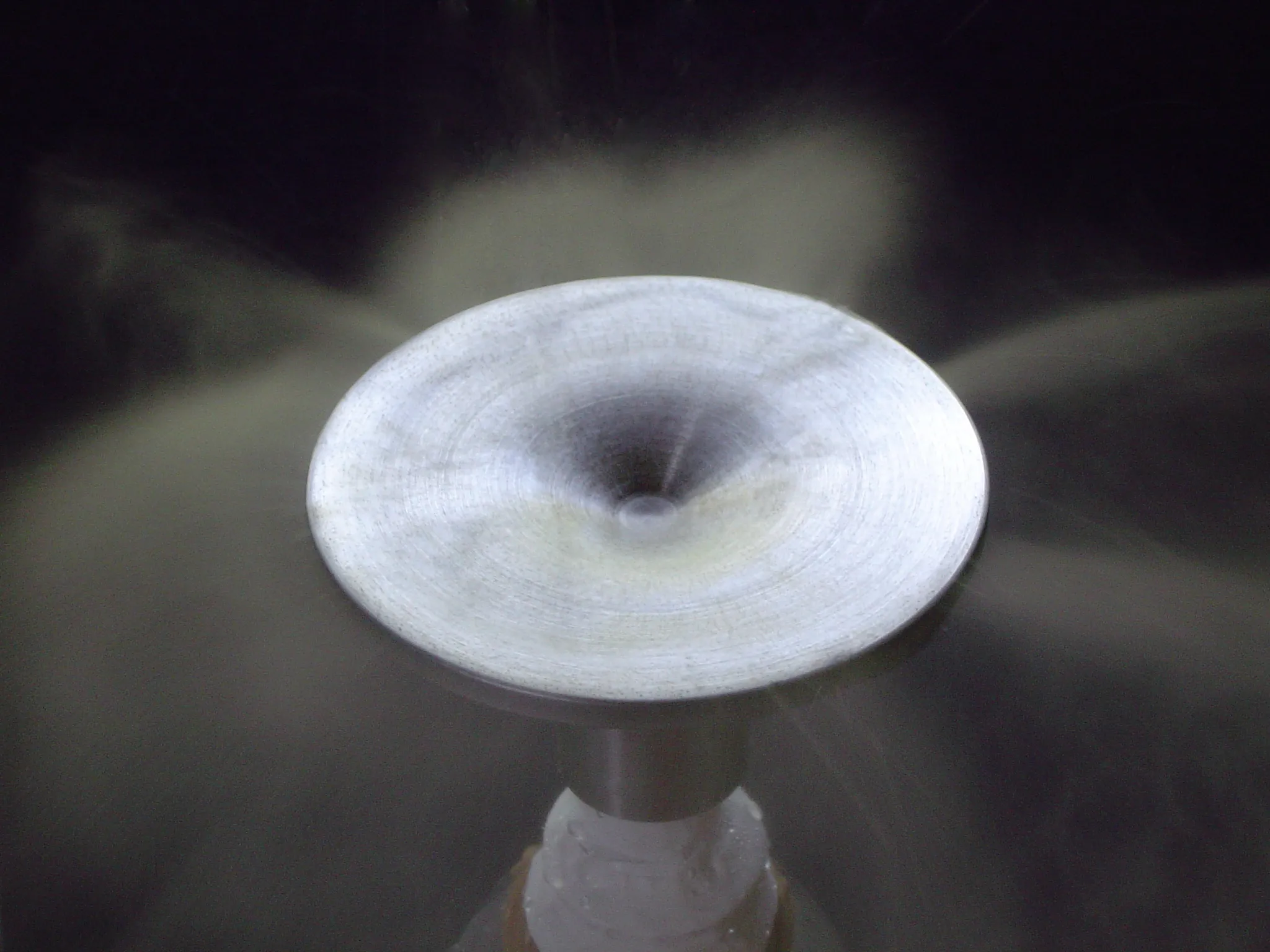
How Ultrasonic Atomization Enables High-Precision Metal Powder Production
Cavitation-Driven Droplet Formation and Particle Size Control
Ultrasonic atomization works by using controlled cavitation to create extremely precise metal powders, especially when dealing with molten solder alloys. When high frequency vibrations between 20 and 60 kHz hit the melt through something called a sonotrode, they form tiny bubbles. These bubbles then pop apart, breaking the liquid down into small, round droplets. The way this process works gives manufacturers much better control over how big the particles end up being. For instance, when frequencies go above 50 kHz, we typically get powders sized between 20 to 100 microns. That's just right for those powder bed fusion additive manufacturing processes. Compared to gas atomization where messy gas streams often make odd shaped particles, ultrasonic techniques don't have this problem because there's no outside fluid messing things up. The result? Cleaner, rounder particles that flow better. According to research published in 2025, material efficiency rates reach over 50% with more than half of what comes out actually meeting strict PBF-AM standards. What makes this method even more attractive is how quickly it can scale up production while still validating new alloys. This makes it particularly useful for making specialized materials like SAC305 without compromising quality.
Acoustic Energy Transfer and Rapid Solidification Dynamics in Molten Solder
Vibrational energy transfers directly from the sonotrode into the molten solder through acoustic coupling—bypassing inefficient convective or radiative pathways. This direct energy input triggers near-instantaneous solidification (<100 ms) as droplets traverse the cooling chamber. Three interdependent factors govern final particle morphology:
- Energy density at the melt–sonotrode interface
- Alloy-specific surface tension
- Ambient temperature gradients
Without forced convection, particles maintain almost perfect spherical shapes which is really important for getting consistent powder spread and uniform layers in additive manufacturing systems. When materials solidify quickly, it helps prevent oxides from forming and stops those annoying microsegregations too. The result? Powder batches with diameter variations below 5%, something traditional approaches just cant match. Old school methods often produce all sorts of satellite particles and weird shapes that mess with how densely everything packs together and creates problems during melting processes.
Optimizing Resonant Frequency for Alloy-Specific Metal Powder Consistency
Frequency Adjustment to Compensate for Melting Point Variations (e.g., SAC305 vs. Sn-Pb)
Getting the resonant frequency right is essential when working with different metal alloys because their physical properties affect how they respond to sound waves. Take SAC305 for instance, which melts at around 217 degrees Celsius. This alloy needs more ultrasonic energy and therefore operates at higher frequencies compared to traditional eutectic Sn-Pb that melts at 183 degrees. The reason? Greater melt viscosity makes stable droplet formation trickier. Looking at what actually works in practice, most tin based alloys tend to form perfectly round particles between 20 and 60 kilohertz. But things change when lead enters the picture. Alloys containing lead generally work better at frequencies about 15 to 20 percent lower. This helps reduce those annoying satellite formations during processing. These frequency tweaks essentially account for the different viscosities of melted metals, allowing manufacturers to consistently produce particles smaller than 45 microns across various types of alloys used in production.
Real-Time Impedance Monitoring for Adaptive Frequency Tuning
Modern systems now use impedance spectroscopy techniques to track how the acoustic properties of molten metal change in real time. These measurements act as indicators for both viscosity levels and temperature stability within the melt. The system watches for when phase shifts go beyond plus or minus 5 percent, which usually means things are drifting away from ideal cavitation parameters. At that point, built-in microprocessors kick in and adjust the transducer settings automatically. This kind of self-correcting feedback keeps droplets breaking apart consistently and maintains proper solidification patterns even when there are impurities in the raw materials or unexpected temperature swings. Real world tests at manufacturing plants have shown that around 98 percent of all produced particles maintain their spherical shape throughout different production runs, meaning operators don't need to step in manually whenever switching between different metal alloys.
Key Equipment Design Parameters Governing Reproducible Metal Powder Output
Interplay of Vibration Amplitude, Nozzle Geometry, and Molten Feed Rate
Getting consistent powder output really depends on getting three key factors just right together: how much the equipment vibrates, the shape of the nozzle opening, and how fast the molten material flows in. When we crank up the vibration amplitude, it gives more energy for breaking up the material into smaller particles. But if those vibrations don't match what the nozzle can handle, we end up with either worn out equipment or blocked nozzles. Nozzles that are wider let more material through at once, which sounds great until we start seeing more clumping because there's not enough force to keep everything separated. The feed rate matters too since it affects temperature changes during processing. If we push material through too quickly, droplets might stick together before they separate properly. Go too slow and things solidify too early, messing up the round shape we want. Studies show when all these factors work well together, we can get particle sizes that stay within about 3% difference from batch to batch. This matters a lot for solder powders where every batch needs to melt exactly the same way during production. Getting this balance right means better shaped particles, tighter size distribution, and fewer impurities. Anyone running this equipment should think of these settings as parts of one big system rather than separate controls, particularly when moving between different metal types that behave differently when melted.
FAQ
What is ultrasonic atomization?
Ultrasonic atomization is a process where high-frequency vibrations are used to create tiny bubbles in molten material, which then form into small, round droplets. This method allows for precise control over particle size, resulting in cleaner and rounder particles suitable for additive manufacturing.
How does ultrasonic atomization compare to gas atomization?
Ultrasonic atomization offers better control over particle shape and size, producing rounder particles that flow better. Unlike gas atomization, which can create irregular particles due to messy gas streams, ultrasonic atomization results in cleaner particles without the interference of an external fluid.
Why is resonant frequency important in ultrasonic atomization?
Resonant frequency is essential because it needs to match the physical properties of different metal alloys to achieve effective droplet formation. Adjusting the frequency according to the alloy's melting point and viscosity ensures consistent particle sizes across various types of alloys.
How does real-time impedance monitoring work?
Real-time impedance monitoring uses spectroscopy techniques to track changes in the acoustic properties of molten metal. These measurements detect deviations from ideal parameters, prompting automatic adjustments in transducer settings to maintain consistent particle formation and solidification patterns.