
 EN
EN
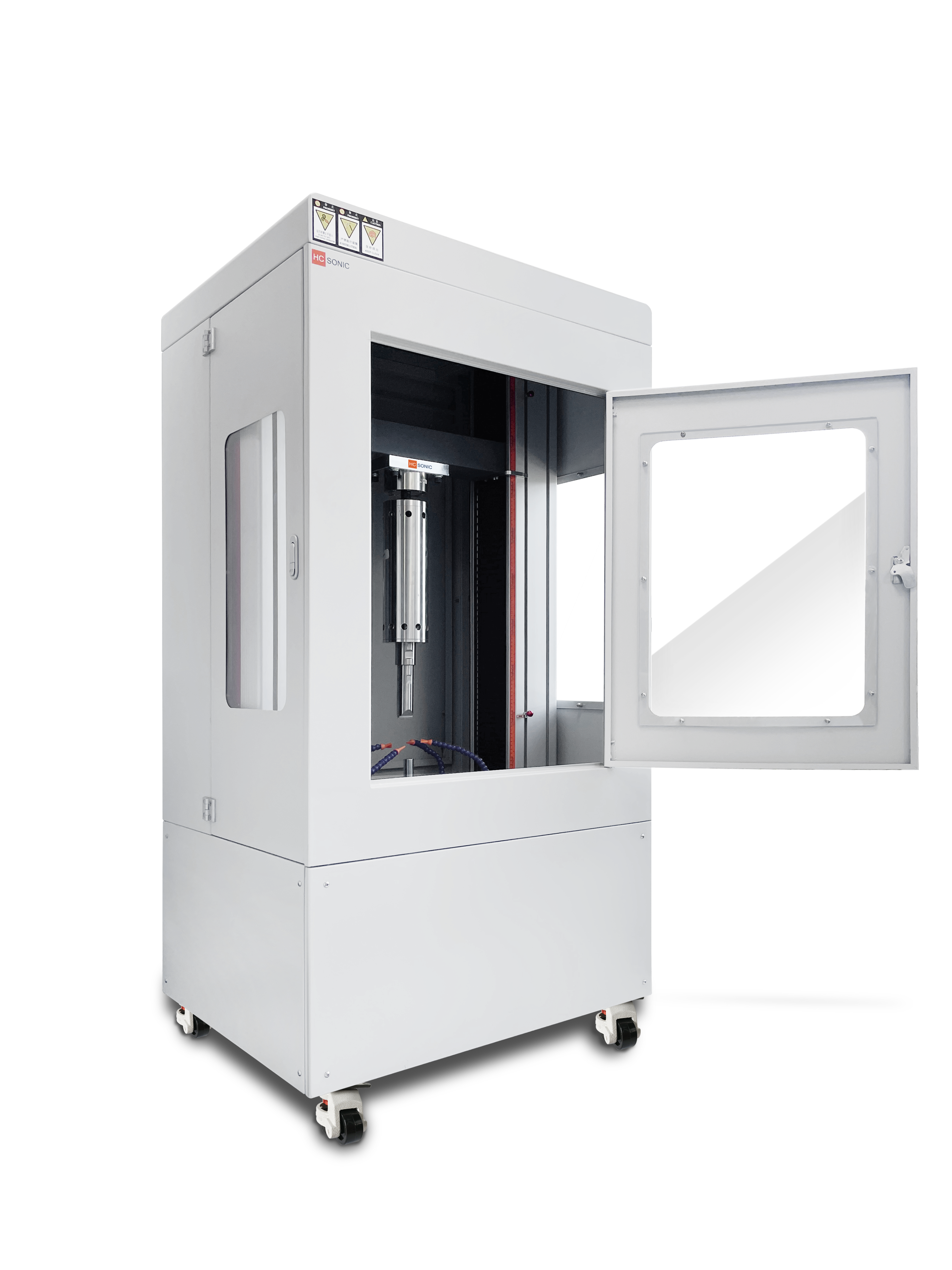
Understanding Fatigue Testing in Advanced Material Research
The evolution of fatigue testing methods toward high-frequency fatigue testing (20 kHz)
Old school fatigue testing used frequencies under 100 Hz and could take anywhere from weeks to months just to get enough cycles for proper evaluation of materials meant to last a long time. When researchers switched to high frequency ultrasonic testing around 20 kHz, everything changed. What used to take months now gets done in just a few days. This speed boost makes it possible to study what happens in the super high cycle fatigue range (over 10 million cycles), something traditional methods simply couldn't handle practically. The new approach keeps all the science accurate but cranks up how many tests can be run at once. For labs working on next generation materials, these faster tests mean getting results when they actually need them instead of waiting forever.
Role of multifunctional ultrasonic fatigue test systems in modern material characterization
Ultrasonic fatigue testing systems that do multiple functions are now pretty much a must in characterizing materials these days, going way beyond what old school setups could handle. What makes them stand out is how they bring together temperature controls, environmental chambers, plus those real time monitoring gadgets all in one package. This combination gives researchers a much clearer picture of how materials behave under repeated loads. Standard equipment just can't match this capability since it measures things like stress levels, strain readings, temps, and even picks up on acoustic signals at the same time. The fact that so many parameters get measured together means scientists can actually see how changes in material structure relate to how well something holds up mechanically. Understanding these connections is super important when trying to create materials that last longer and perform better in real world applications.
Long-life fatigue behavior (up to 10 billion cycles) and its significance in structural reliability
Being able to test how materials hold up over 10 billion cycles has completely changed how we assess structural reliability in fields like aerospace, energy production, and transportation infrastructure. Back in the day, people thought anything past 10 million cycles meant the part would last forever, but recent studies show otherwise. Some high strength metals and composite materials actually start showing signs of wear even after what used to be considered their "endless" lifespan. Because of this discovery, engineers are going back through design specs for critical parts that need to function properly for many years while dealing with constant stress and movement. Looking at these ultra long term fatigue patterns helps create better safety buffers, which means fewer surprises when equipment breaks down after being in service for decades.
Core Mechanisms of Ultrasonic Fatigue Testing Technology
Principles of high-frequency fatigue testing (20 kHz) in accelerating fatigue life evaluation
Ultrasonic fatigue testing works by using resonant frequencies near about 20 kHz to speed up how we test for fatigue. What used to take months can now be done within just hours or maybe even a day or two. When compared with traditional servo-hydraulic systems that run between 20 and 60 Hz, ultrasonic methods let researchers collect massive numbers of test cycles quickly, sometimes reaching up to 100 million without really affecting how materials like austenitic stainless steel behave under stress. Research shows there's not much difference in results across different frequencies when looking at very high cycle fatigue ranges, which basically confirms that these fast tests give reliable data. Because of this time saving advantage, scientists can perform better statistical studies on materials that last a long time, helping advance basic understanding while also making it easier for industries to qualify their products properly.
Experimental setup for pulse-pause mode ultrasonic fatigue testing
The setup comprises several components working together: a piezoelectric transducer, booster assembly, horn element, and a resonant specimen all set up to function well around 20 kilohertz frequencies. One notable aspect worth mentioning is the pulse-pause loading method where the system pulses for about 200 milliseconds and then rests between 3 to 5 seconds. This on-off cycle helps keep temperatures down since it doesn't run continuously. We also employ forced air cooling to maintain stable operating conditions throughout testing. To check if everything stays intact during these tests, we watch closely for changes in the resonant frequency. When measurements drift more than 200 hertz away from our starting point near 20 kHz, that usually signals something's gone wrong. What makes this approach interesting though is how it catches developing cracks long before they cause total failure, giving researchers important insights into how materials start failing at their earliest stages.
Thermal management and stress control in sustained ultrasonic loading environments
Thermal management really matters during ultrasonic fatigue tests because materials generate heat from internal friction and hysteresis effects at around 20 kHz frequencies. If we don't keep temperatures in check, the rising heat can actually change how materials behave and mess up our test results completely. Most modern testing setups combine forced air cooling with carefully timed pulse pause cycles to keep specimens at stable temperatures throughout the process. At the same time, precise instruments monitor and adjust stress levels consistently across all tests, which helps maintain accurate data collection. By controlling both heat buildup and mechanical stresses together, researchers get dependable measurements that show exactly how materials respond when subjected to long periods of high frequency vibrations.
High-Temperature and Real-Time Monitoring Capabilities for Extreme Applications
Challenges and solutions in high-temperature ultrasonic fatigue testing
When materials are tested at high temps, several problems pop up including oxidation issues, creep-fatigue effects, and signal loss, especially noticeable when samples go above 1000 degrees Celsius in aerospace components. Keeping accurate measurements while maintaining resonance becomes quite the engineering puzzle under these harsh conditions. Engineers have come up with some clever fixes though. For managing heat distribution across specimens, they use active cooling techniques like directed air streams or liquid jacket systems. Temperature monitoring has also improved significantly with non-contact methods now available through infrared pyrometers and fiber optic sensors that can measure within just one degree Celsius accuracy. These improvements not only protect the integrity of test samples but allow researchers to gather reliable fatigue data even when dealing with the intense combination of mechanical stress and extreme heat that's common in aircraft parts manufacturing.
Ultrasonic testing at elevated temperatures: Applications in aerospace and defense materials
Testing materials at high temperatures using ultrasonic methods helps evaluate their performance in places like turbine engines, hypersonic aircraft, and exhaust systems. These are environments where parts get exposed to heat over 800 degrees Celsius while dealing with constant vibrations. Materials such as nickel based superalloys, titanium aluminides, and ceramic matrix composites can be tested faster through this process. The tests show how these materials degrade over time something that normally takes months to see under normal conditions. This kind of testing makes a real difference when developing stronger parts for jet engines, rockets, and thermal protection systems. After all, nobody wants failures happening during missions or operations because safety always comes first.
Acoustic emission monitoring for real-time damage tracking and early fatigue detection
AE monitoring lets engineers watch microstructural damage happen in real time during ultrasonic fatigue tests. The system picks up on those tiny elastic waves created when materials start showing problems at the microscopic level - things like dislocations moving around, small cracks forming, and existing cracks getting bigger, all long before anyone can see them with the naked eye. Today's AE equipment comes with these wideband sensors that respond right up to 2 MHz frequencies, so they catch signals coming from different parts of the material at once. Looking at parameters like signal strength, how much energy is there, and how long each event lasts helps scientists figure out exactly when a material moves from just bending back to actual permanent damage. This information makes it possible to step in sooner and gives better estimates about how much useful life remains in components under stress.
AE signal processing and adaptive filtering using STFT with reassignment
Getting useful data out of acoustic emission signals when there's so much high frequency noise around requires some pretty sophisticated signal processing. Take the Short Time Fourier Transform with reassignment for instance. This technique actually sharpens the time frequency resolution by bunching up the energy points on that time frequency chart. What does that mean practically? It helps isolate those brief damage signals from all the background noise generated by ultrasonic excitation. And then there's adaptive filtering which works hand in hand with STFT. This method keeps adjusting itself as conditions change over time, whether it's temperature fluctuations or different loads being applied. The result is better sensitivity throughout tests. When combined, these approaches make early damage detection far more reliable even when working in complicated testing situations where variables constantly shift.
Correlation between acoustic emission activity and fatigue life prediction
There's a clear link between what we hear from materials under stress and how much damage they've actually accumulated, which has really pushed forward our ability to predict when things might fail. When looking at cumulative acoustic emission energy and the number of events happening over time, most materials tend to show similar patterns. This lets engineers build models that estimate how long something will last before it breaks. Some metal alloys work particularly well with these methods, giving predictions around 85% accurate about where failures will occur based on factors like how fast signals rise, how many times they happen, and their total energy levels. These kinds of insights matter a lot in aerospace engineering. Being able to track how tiny plastic deformations grow into actual cracks helps determine when aircraft parts need maintenance or replacement, saving millions on expensive components while keeping safety standards high.
Fatigue Testing: Fatigue Crack Initiation and Microstructural Analysis Under Ultrasonic Loading
Surface and subsurface fatigue crack initiation in steel under ultrasonic fatigue testing
When we look at ultrasonic fatigue testing around 20 kHz frequencies, we see some pretty different ways cracks start forming in various steel alloys compared to those old low frequency tests everyone used before. Take 42CrMo4 steel for instance. When this material gets subjected to R equals 0.1 loading conditions using that pulse pause method, researchers often find cracks starting right on the surface where there are stress concentrations. Looking closer through scanning electron microscopes shows these cracks typically begin at spots where the microstructure isn't uniform or where there were machining flaws during production. What's interesting is how these cracks spread across the material, leaving behind those telltale fatigue striation patterns that metallurgists recognize so well. The whole high frequency setup speeds things up dramatically while still keeping all the important microstructural details intact. This means engineers can now observe surface fatigue processes that normally would take decades to develop when using traditional testing approaches.
Microstructural drivers of internal crack nucleation during long-term cyclic loading
Beyond just surface issues, ultrasonic tests have actually revealed how internal cracks start forming in materials under very high cycle fatigue conditions above 1 billion cycles. Most of the time, these internal cracks begin at spots where there are non-metallic particles like aluminum oxides or sulfides, or at other tiny structural flaws where the local stress gets too high for the material to handle. How big these particles are, what shape they take, and how they're spread throughout the material really affects whether a crack will form at all. When materials are subjected to 20 kHz loading rates, something interesting happens at the microscopic level. The way atoms move around creates different patterns of dislocations and persistent slip bands, which changes how cracks grow and look when they finally break through. Understanding all this matters a lot for parts that need to last super long without failing. After all, internal cracks tend to hide out until almost the moment something breaks completely, making them incredibly dangerous in safety-critical applications.
Innovations and Applications by Hangzhou Hangchao Technology Co., Ltd.
Advancements in Multifunctional Ultrasonic Fatigue Test Systems from Hangzhou Hangchao
Hangzhou Hangchao Technology recently created advanced ultrasonic fatigue testing systems that combine 20kHz high frequency testing along with accurate environmental controls and live monitoring capabilities. The equipment can handle tests reaching as many as 10 billion cycles while maintaining excellent temperature control throughout and keeping stress levels consistent across samples. What makes these systems stand out is their built in acoustic emission monitoring technology. This gets even better when paired with special adaptive filters like STFT with reassignment methods, allowing scientists to spot tiny structural changes happening inside materials and catch those first signs of cracks forming before they become problems. For material scientists working on products that need to last through harsh conditions, this kind of detailed observation opens up new possibilities for developing stronger, longer lasting materials that meet demanding industrial standards.
Case Studies: Validating Performance in Aerospace and Defense Material Research
Looking at actual test results shows how Hangzhou Hangchao's equipment works wonders when checking out aerospace and defense materials in really tough situations. When we run these tests at high temps, there's a clear link between what we hear from acoustic emissions and how long something can last before failing. This helps create better predictions about material performance. What makes their system stand out is its ability to keep applying those ultrasonic loads while managing heat properly. This setup lets engineers spot tiny cracks forming beneath the surface in those fancy new alloys. The benefits are pretty significant too. Safety margins get better, parts last longer, and designers feel more confident about their creations. All this points to why ultrasonic fatigue tech matters so much for building the next wave of aircraft and military hardware that needs to perform flawlessly even under intense stress.
FAQ
What is ultrasonic fatigue testing?
Ultrasonic fatigue testing uses high frequency resonant frequencies, around 20 kHz, to speed up the testing process of materials under repeated loading, allowing researchers to quickly assess fatigue life.
Why is high-frequency fatigue testing important?
High-frequency testing accelerates the evaluation process, allowing researchers to examine materials over very high cycle fatigue ranges in a matter of days instead of weeks or months, which is crucial for developing advanced materials.
What are some challenges in high-temperature ultrasonic fatigue testing?
Challenges include managing oxidation, creep-fatigue effects, and signal loss at high temperatures, especially above 1000°C, as well as maintaining accurate measurements while preserving the integrity of the samples.
How does acoustic emission monitoring aid in fatigue testing?
Acoustic emission monitoring allows real-time tracking of microstructural damage in materials, detecting small-scale damage such as dislocation movements and crack formation before they become visible to the naked eye.
What innovations has Hangzhou Hangchao Technology Co., Ltd. developed in fatigue testing?
The company has developed advanced multifunctional ultrasonic fatigue test systems that integrate high-frequency testing with environmental controls and real-time monitoring, enhancing material analysis and performance predictions.
Table of Contents
- Understanding Fatigue Testing in Advanced Material Research
- Core Mechanisms of Ultrasonic Fatigue Testing Technology
-
High-Temperature and Real-Time Monitoring Capabilities for Extreme Applications
- Challenges and solutions in high-temperature ultrasonic fatigue testing
- Ultrasonic testing at elevated temperatures: Applications in aerospace and defense materials
- Acoustic emission monitoring for real-time damage tracking and early fatigue detection
- AE signal processing and adaptive filtering using STFT with reassignment
- Correlation between acoustic emission activity and fatigue life prediction
- Fatigue Testing: Fatigue Crack Initiation and Microstructural Analysis Under Ultrasonic Loading
- Innovations and Applications by Hangzhou Hangchao Technology Co., Ltd.
-
FAQ
- What is ultrasonic fatigue testing?
- Why is high-frequency fatigue testing important?
- What are some challenges in high-temperature ultrasonic fatigue testing?
- How does acoustic emission monitoring aid in fatigue testing?
- What innovations has Hangzhou Hangchao Technology Co., Ltd. developed in fatigue testing?