
 EN
EN
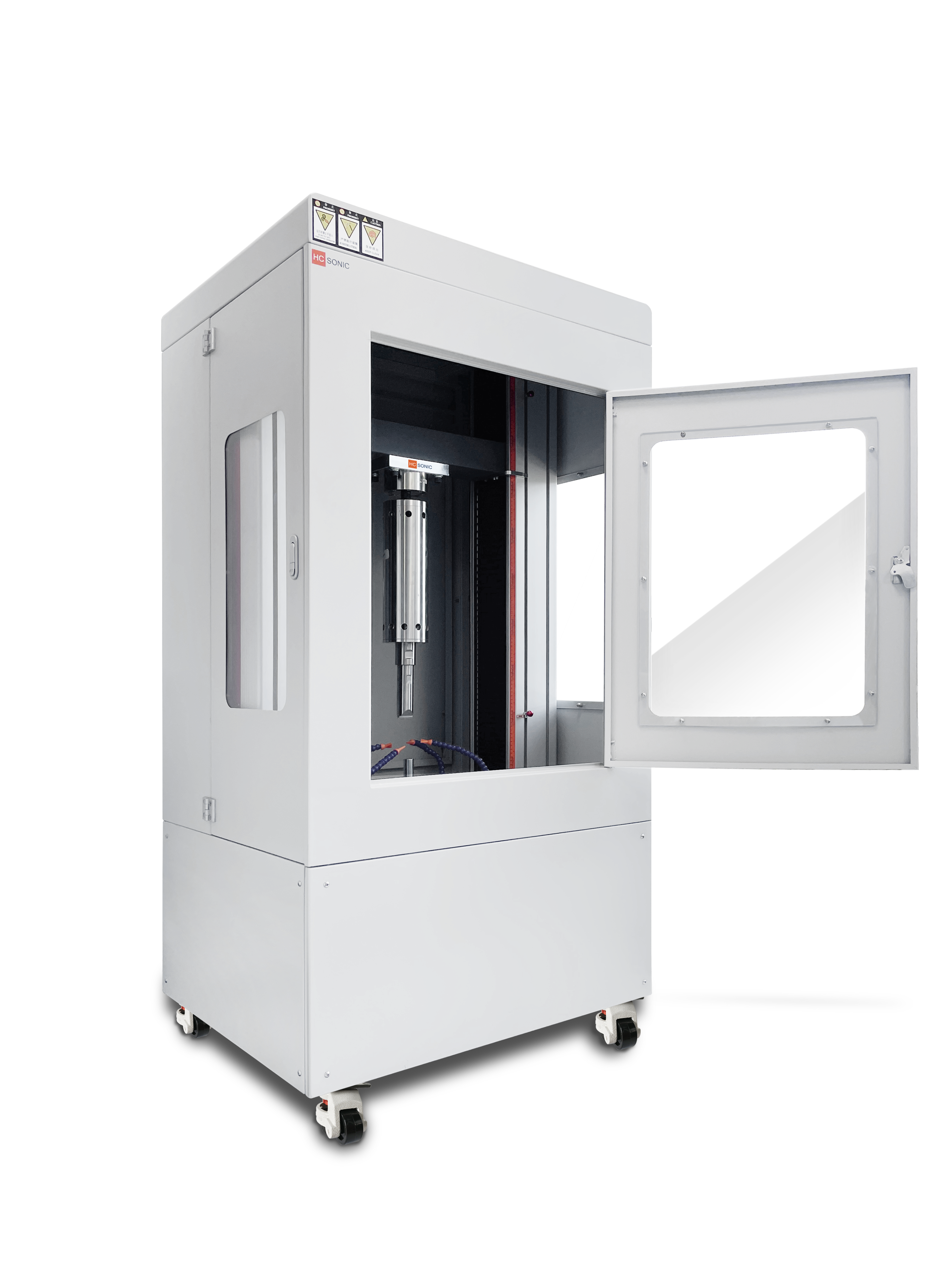
Understanding Ultrasonic Fatigue Testing: Principles and System Setup
The Science Behind High-Frequency Fatigue Loading
Ultrasonic fatigue testing works within a frequency range of around 15 to 25 kHz, allowing engineers to assess how materials behave under very high cycle fatigue conditions beyond 10 million cycles. What makes this approach special is its ability to speed up what would normally take months or even years down to just a few hours. The technique applies high frequency stress repeatedly, causing microscopic changes in the material structure well before any visible cracks form. Compared to traditional testing methods, ultrasonic testing actually picks up those subtle material reactions that happen at different strain rates, something crucial for spotting damage in its earliest stages. Studies have shown good results too, with reliable data collected despite concerns about frequency variations affecting performance in materials like austenitic stainless steel.
Resonance-Driven Stress Cycles in USFT Systems
Ultrasonic fatigue testing works mainly through resonance driven excitation. The process starts with a piezoelectric transducer that creates high frequency stress waves. These waves travel through a booster and then reach the horn before hitting the specimen itself. What this does is create regular stress cycles that are actually pretty energy efficient for what they accomplish. Newer equipment keeps track of changes in resonance frequency as tests progress. When materials start to degrade internally, their stiffness properties change, and these frequency shifts tell us about that happening. The system makes adjustments on the fly to maintain proper loading conditions during testing. We can spot early signs of wear by looking at acoustic emissions and how frequencies slowly drift over time. This gives valuable information about damage buildup without needing to stop or pause the actual test procedure.
Optimizing Specimen Geometry and Coupling for Reliable Data
How we design test specimens really matters when it comes to keeping things stable during resonance tests and getting even stress distribution throughout materials. When the geometry isn't right, problems pop up like nodes not lining up properly or unwanted vibrations creeping in, which messes with measurement accuracy. Getting good contact between the horn and what's being tested helps cut down on wasted energy and makes sure those waves travel through as intended. Good designs work with all sorts of shapes from simple wires to delicate plates, and they handle complicated situations where multiple forces act on materials at once. New clamping methods have fixed many issues that plagued older setups, so now researchers can run tests reliably on almost any kind of material configuration without constantly worrying about fixture failures.
Miniaturization and Automation Trends in USFT Equipment Design
The latest trends are all about shrinking down the size of equipment while adding more automation to get better results and make things easier to use. Modern systems come with their own environmental control units that can handle pretty extreme temperatures ranging from minus 70 degrees Celsius right up to plus 350 degrees, plus they manage humidity levels between 10 and 98 percent relative humidity. This setup lets researchers look at how materials break down together when exposed to actual working conditions. With automatic frequency adjustments happening on the fly, constant data collection happening in real time, and smart software keeping everything running smoothly even during long tests. All these improvements turn ultrasonic fatigue testing into something really valuable for checking out how materials hold up after many cycles of stress. Manufacturers are finding this particularly useful as they push forward with creating new materials that need thorough testing before going into production.
Extending Ultrasonic Fatigue Testing to the VHCF Regime
Fatigue Failure Beyond 10^7 Cycles in Metallic Alloys
Standard fatigue testing usually stops around 10 million cycles, but we know that lots of modern parts - particularly ones made with strong alloys or through additive manufacturing techniques - often break after going way past this point. Ultrasonic testing takes things further, allowing us to test up to 10 billion cycles in reasonable time frames by applying loads at frequencies close to 20 kHz. What makes this method valuable is its ability to spot problems caused by tiny internal flaws and structural inconsistencies that regular tests just can't detect. Research indicates that changing the frequency doesn't really affect how materials behave under very high cycle fatigue conditions. This means data collected through ultrasonic methods gives reliable insights into how components will perform in actual service situations.
Extending S-N Curves into the VHCF Regime Using Ultrasonics
Most standard S-N curves tend to flatten out somewhere around 10 million cycles, though recent ultrasonic tests have shown they actually keep going into what's called the very high cycle fatigue (VHCF) range. When scientists apply these tiny amplitude but super fast loading conditions, they watch closely to see if the material's resistance to fatigue keeps dropping off slowly or hits some kind of second endurance point where it stops getting worse. Understanding all this matters a lot when creating parts meant to last forever really, forever like turbine blades spinning away in jet engines, those metal pieces inside hip replacements that need to hold up for decades, or structural components in spacecraft that can't fail after millions upon millions of stress cycles. Getting a handle on real fatigue limits isn't just academic stuff either it directly impacts how safe we make our products and opens doors for extending service life beyond what traditional methods predicted.
Case Study: VHCF Behavior of Additive Manufacturing (AM) Materials Under USFT
Materials made through additive manufacturing tend to have special internal structures that affect how they perform under very high cycle fatigue conditions. These structures include things like tiny holes (porosity), areas that didn't fully melt during printing, and grain patterns that look different depending on which way you cut them. When looking at laser-based AM using AlSi12 eutectic alloy specifically, tests run with ultrasound techniques over billions of cycles revealed something interesting. Cracks started forming inside these materials at weak spots rather than appearing on the outside first. That's actually quite different from what happens with traditional metalworking methods. What this means is pretty important though. Manufacturers need to pay close attention to how they set up their printing machines and what kind of finishing steps they apply after printing to reduce those pesky pores and make parts last longer. Good testing practices let companies get quick results back so they can tweak their manufacturing processes while still seeing real world data about how well these printed parts hold up when put through their paces.
Surface vs. Internal Fatigue Crack Initiation in VHCF: A Critical Analysis
When we look at very high cycle fatigue (VHCF) situations, cracks tend to start forming underneath the metal surface rather than on it. These cracks typically begin at spots like inclusions, tiny voids, or those second phase particles we often find in materials science. This whole shift challenges what engineers have traditionally relied on when designing parts, especially regarding surface treatments like shot peening that were supposed to prevent failures. With ultrasonic fatigue testing, researchers get much clearer pictures of how these subsurface failures actually happen. The tests reveal something surprising: internal cracks can form even when stress levels are below what we normally consider the fatigue limit for the material. Getting our heads around this process isn't just academic stuff. It matters a lot for creating better predictions about how long components will last before failing. Think about aircraft engines, nuclear reactors, or any system where unseen defects could lead to catastrophic failures down the road.
Ultrasonic Fatigue Testing Data for Material Characterization and Predictive Design
Linking Microstructure to Fatigue Performance
The advanced ultrasonic fatigue testing systems allow researchers to see exactly how material microstructure affects fatigue behavior when components are subjected to very high cycle fatigue conditions. Materials with fine grains tend to show better resistance because their crystal structures limit dislocation movement and spread out stresses more evenly across the material. Things such as grain boundary arrangements, different phases within the material, and what's inside those tiny inclusions all play a role in determining crack initiation points and propagation paths. When engineers get detailed stress-strain measurements from these tests, they can adjust manufacturing processes including specific heat treatments and additive manufacturing layering techniques to improve microstructural characteristics. This helps make parts last longer in harsh operating environments where failure isn't an option.
Integrating USFT Data into Predictive Life Models
Adding ultrasonic fatigue test data to our predictive models makes them much better at guessing how things will hold up over time, particularly in those high cycle fatigue situations where traditional methods just don't cut it. Both physics based simulations and machine learning algorithms can now work with all sorts of parameters from these tests including stress levels, how often they're applied, what temperatures are involved, plus the whole history of loading conditions. What's really interesting is that when we train ML models on large sets of this ultrasonic data, they start picking up on strange patterns in how damage builds up that regular testing simply misses. These hidden trends let us spot potential failures way before they happen and adjust our designs accordingly. For companies working on new materials, this means less need for expensive physical prototypes and faster approval processes since we have more reliable predictions upfront.
Case Study: Design Validation of Aerospace Components Using USFT Outputs
When testing a new nickel based superalloy for turbine blades, ultrasonic fatigue tests were run under loads going well beyond 1 billion cycles. What we found was pretty interesting actually there seemed to be a clear change in how the material failed as cycle counts increased. At lower levels, surface cracks were the main issue, but when we got into those really high cycle ranges, internal cracking became the dominant problem. Our team combined the ultrasonic fatigue test results with finite element analysis to tweak the blade shapes and modify heat treatments specifically targeting those subsurface cracks. This hybrid approach cut down our validation period by about two thirds compared to older techniques, all while still hitting those tough aerospace quality requirements. Looking back, it's amazing how much faster and safer our design process became once we started incorporating these advanced testing methods.
Real-Time Monitoring of Early Fatigue Damage with Acoustic Emission
Microplasticity and Dislocation Movements Preceding Cracking
Materials start showing signs of stress long before anyone can actually see those telltale cracks forming on the surface. When subjected to repeated loads over time, they experience what engineers call microplastic deformation along with all sorts of dislocation activities happening beneath the skin. All these microscopic changes create elastic waves that can be picked up by something called acoustic emission monitoring. In practice during ultrasonic fatigue tests, special AE sensors pick up those brief signals generated when dislocations bunch up together or when small areas begin to yield locally. These are basically early warning signs that fatigue is starting to take hold somewhere inside the material. By catching these events early on, researchers get to map out exactly where and when damage first appears in materials. This gives them valuable insight into how materials degrade at their very earliest stages, potentially stopping major failures before they even happen.
Real-Time Damage Assessment via Acoustic Emission Signals
Acoustic emission tech lets engineers keep track of materials under stress during those long ultrasonic fatigue tests without messing with the setup. The system basically listens for those high frequency stress waves coming from places where damage is happening inside the material. When it comes to sorting out what's actually important from all the background noise, advanced signal processing techniques like adaptive filtering combined with short time Fourier transforms really help separate wheat from chaff so to speak. Looking at these real time readings shows how damage progresses over time. Most interestingly, there tends to be spikes in acoustic activity right when the material starts adjusting microplastically and again just before it finally breaks apart. What makes AE systems so valuable is their ability to catch these fleeting fatigue events that would otherwise go unnoticed in traditional testing methods.
Correlation Between Acoustic Emission Activity and Fatigue Life Progression
Acoustic emission (AE) activity tends to follow a predictable pattern throughout the fatigue life of materials. Early on there are lots of events because of microplastic deformation happening at the material level. Then comes a quiet phase when everything seems stable during normal cycling conditions. Finally, we see a dramatic spike in energy release as cracks start forming and growing through the material. Research conducted on various structural steels shows pretty clear links between different AE parameters such as event frequency, total accumulated energy levels, and signal amplitudes with how much life remains in the component. Once properly calibrated using baseline measurements, these characteristics allow engineers to actually predict how damage builds up over time. What was once just a diagnostic technique becomes something far more valuable - essentially turning AE monitoring into a forecasting tool that can estimate how long components will last before failure occurs.
Threshold Setting for Early Warning in Structural Steels
Good early warning systems depend on setting the right acoustic emission (AE) thresholds for different materials, loads, and environments. When we look at runout specimens that make it through their target number of cycles without breaking down, they give us a good idea of what normal AE activity looks like. Most engineers set their alert thresholds around 3 to 5 standard deviations above these average readings. This helps catch real problems while keeping false alarms under control. When these thresholds get crossed, automatic alerts kick in and either signal maintenance teams to check things out or shut down operations completely to stop sudden failures. These kinds of monitoring systems have become essential for bridges, wind turbines, and other heavy machinery that gets subjected to constant stress over time. Maintenance crews really appreciate having this extra layer of protection against catastrophic breakdowns.
Environmental Effects on Fatigue Behavior Revealed by Ultrasonic Testing
Humidity and Temperature Effects on Crack Propagation
The environment has a major impact on how materials withstand repeated stress over time. When there's high humidity around, metals tend to suffer from hydrogen embrittlement while plastics get softer and start cracking faster. Hotter conditions make things worse too because they speed up oxidation processes and create those tricky creep-fatigue effects that lower what we call the stress intensity threshold. Take aluminum alloys as just one case study – when exposed to about 85% humidity levels, their fatigue life drops by roughly 40% compared to when kept dry. And CFRP composites? They fall apart quicker when tested beyond their glass transition point since the matrix material gets too soft to hold everything together properly. Engineers really need to factor all this into account if they want realistic predictions about how long components will last under actual service conditions.
Synergistic Degradation in Corrosive and Thermal Environments
When materials are exposed to both heat and corrosive conditions together, they actually suffer worse damage than if each factor acted alone. Take salt fog mixed with repeated temperature changes for example this combination creates pits on metal surfaces that become stress points and start cracks forming much sooner than expected. Tests show stainless steel subjected to chlorides at around 60 degrees Celsius develops cracks about three times faster compared to when kept in normal air conditions. These findings matter a lot in industries like offshore wind farms, chemical processing plants, and ocean going structures. Components there constantly deal with multiple stress types all at once mechanical forces from operation, temperature fluctuations, and electrochemical reactions from seawater or industrial chemicals during their entire working lifespan.
Integrating Environmental Chambers with USFT Systems
Ultrasonic fatigue testing systems now come with built-in environmental chambers that simulate real world conditions when running tests. These special chambers control things like temperature levels, moisture content, and even manage exposure to corrosive substances without messing up the sound quality needed for accurate readings. When designing these systems, engineers need to think about how materials expand when heated, build components that won't rust away over time, and leave enough space for optical equipment so they can take measurements right there during testing with tools like laser extensometers. The big advantage of this approach is obvious really. When parts are tested in environments similar to where they'll actually be used, the data collected becomes much more reliable. This helps manufacturers feel better about predicting how long their products will last before needing replacement or repair.
FAQ Section
What is ultrasonic fatigue testing?
Ultrasonic fatigue testing is a method that uses high-frequency loading (15 to 25 kHz) to assess material behavior under very high cycle fatigue conditions, allowing tests beyond 10 million cycles efficiently.
How does resonance-driven stress cycling work in USFT?
Resonance-driven stress cycling involves using a piezoelectric transducer to create stress waves, which travel through a booster and horn to the specimen, maintaining energy-efficient stress cycles.
Why is specimen geometry important in ultrasonic fatigue testing?
Specimen geometry is crucial for stable resonance tests and ensuring even stress distribution, which eliminates inaccuracies caused by mismatched nodes or vibrations.
What environmental factors affect fatigue behavior?
Humidity and temperature significantly impact fatigue behavior, with high humidity causing hydrogen embrittlement and elevated temperatures accelerating oxidation and creep-fatigue effects.
How does acoustic emission (AE) monitoring aid in fatigue testing?
AE monitoring detects early signs of fatigue by capturing elastic waves generated from microplastic deformation and dislocation movements, providing an early warning system.
Table of Contents
- Understanding Ultrasonic Fatigue Testing: Principles and System Setup
- Extending Ultrasonic Fatigue Testing to the VHCF Regime
- Ultrasonic Fatigue Testing Data for Material Characterization and Predictive Design
- Real-Time Monitoring of Early Fatigue Damage with Acoustic Emission
- Environmental Effects on Fatigue Behavior Revealed by Ultrasonic Testing
- FAQ Section