
 EN
EN
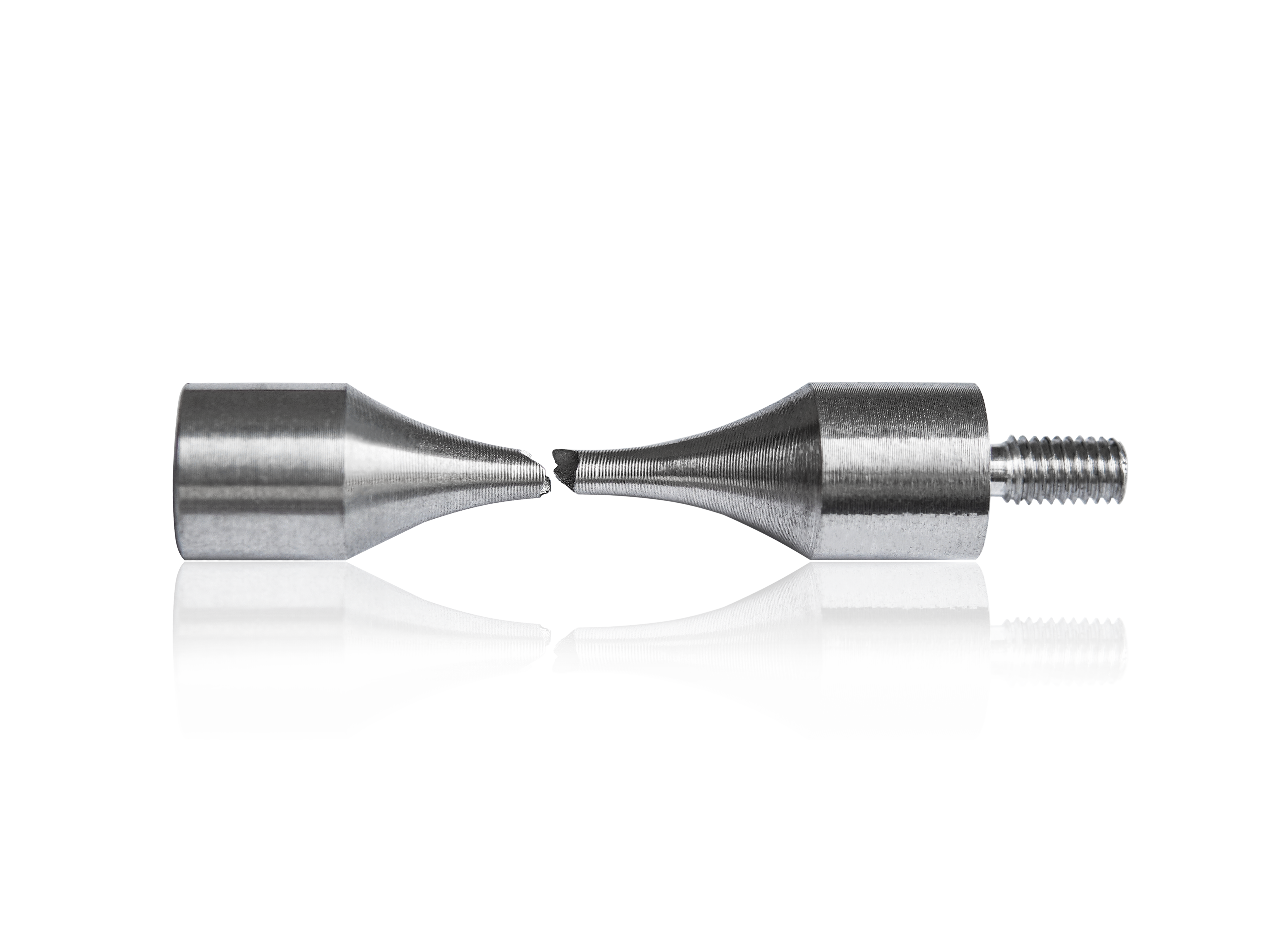
Understanding High-Cycle and Very High Cycle Fatigue (VHCF) in Ultrasonic Fatigue Testing
The evolution of fatigue testing: From conventional methods to ultrasonic fatigue testing
Fatigue testing techniques have come a long way since their early days when simple mechanical devices dominated labs. Old school approaches generally worked around 200 Hz or lower, meaning researchers had to wait weeks or sometimes months just to get through those high cycle numbers between 1 million and 10 million cycles. And forget about reaching those billion cycle tests they needed for real world applications. That all changed with the arrival of ultrasonic fatigue testing systems running at around 20 kHz. These new setups cut testing time down by about 100 times compared to traditional methods and slash energy consumption by nearly 95%. What does this mean? Engineers can now properly assess materials under extreme conditions that would take forever with older equipment. This breakthrough matters most in fields like aviation parts manufacturing and biomedical device development, where components need to last for years without failing.
Why traditional fatigue testing fails at high-cycle and gigacycle ranges
Standard fatigue testing runs into major problems when dealing with high cycle and very high cycle fatigue (VHCF) situations. Time is really the biggest issue here. At normal test frequencies between 10 and 100 Hz, getting to those 1 billion cycles takes about 115 days straight running at maximum speed. That kind of testing just costs way too much money and doesn't make sense for most operations. Another problem comes from controlling those tiny stress levels in the VHCF range, where materials start acting differently than what classical models predict. And let's not forget about heat buildup during long tests either. Materials actually change their properties when they get hot this way, which messes up the results completely. Because of these issues, we still don't have enough data past around 10 million cycles. This leaves engineers guessing about how parts will behave after experiencing vibrations for billions of cycles in real world applications.
Key insight: Over 60% of aerospace mechanical failures stem from high-cycle fatigue
Around 60% of mechanical failures seen in aerospace components are actually caused by high cycle fatigue, as per latest 2023 safety reports from the industry. Most problems tend to show up in places we don't always think about first - turbine blades, engine mounts, landing gear systems basically anything that gets shaken constantly over long periods. Standard testing approaches just aren't cutting it anymore since they miss what happens at those really high cycle counts where tiny cracks start forming beneath the surface. That's why many manufacturers are now turning to newer methods such as ultrasonic fatigue testing. These advanced techniques give much better predictions about how long parts will last before failing, which makes all the difference when talking about aircraft safety where even small errors can have catastrophic consequences.
How Ultrasonic Fatigue Testing at 20 kHz Enables Fast, Energy-Efficient Gigacycle Evaluation
Resonance-based methodology: Enabling fatigue tests at 20 kHz frequency
Ultrasonic Fatigue Testing, or UFT for short, works by using resonance principles to evaluate material fatigue at an impressive 20 kHz frequency, which cuts down on testing time significantly compared to traditional methods. Servo hydraulic systems typically operate between 20 to 60 Hz, but UFT gets things moving faster by exciting test samples right at their natural resonant frequencies. What happens next is pretty interesting - the specimen gets subjected to fast stress cycles through controlled ultrasonic vibrations. The way this method works means most of the energy stays focused inside the sample itself. That's why it doesn't need much power input while still keeping tight control over how much stress gets applied. As a result, we end up with a system that can run through billions of load cycles without guzzling energy like older equipment does, making it both cost effective and environmentally friendly in the long run.
Time and cost savings: Achieving gigacycle results in days instead of months
Ultrasonic fatigue testing can cut down on testing times that normally last months or sometimes even centuries down to just a few days. Take for instance when running tests at 1 Hz frequency, it would take around 320 years to complete those 10 billion cycles. But crank that up to 20 kHz and suddenly we're talking only six days to reach the same number of cycles. The time saved here makes a big difference in lab budgets, lets researchers get through more samples, and speeds up how long it takes to develop new materials. Plus there's another benefit worth mentioning too. These ultrasonic systems actually use much less power compared to old school hydraulic setups and they take up way less space as well. That means cheaper ongoing costs and better access for both university research teams and companies working on product development across various industries.
Addressing thermal effects: Managing specimen heating during high-frequency testing
Heating of specimens remains one of the biggest headaches when working with high frequency ultrasonic testing equipment, especially since samples undergo intense cyclic loading around 20 kHz frequencies. When temperatures get out of control during testing, it messes with how materials respond, making test results unreliable at best. Modern ultrasonic fatigue testing systems tackle this problem through several methods including forced air cooling systems and what's called pulse pause loading. Typically, these systems apply load for about 200 milliseconds before pausing for anywhere between 3 to 5 seconds. This stop start method keeps things cool enough without interrupting the actual testing process too much. The benefit? Failures seen during tests actually represent real mechanical fatigue issues instead of just being caused by heat buildup. Good thermal control isn't just nice to have either it's absolutely critical if engineers want to collect trustworthy gigacycle data that will stand up under scrutiny in actual engineering applications.
Bridging the Gap in Lifespan Prediction: Gigacycle and VHCF Testing with Ultrasonic Fatigue Systems
Importance of VHCF data in rail, power generation, and aerospace applications
Understanding Very High Cycle Fatigue (VHCF) data has become essential when trying to figure out how long components will last in industries where equipment often goes through more than ten million load cycles. Take aerospace for example about sixty percent of all mechanical failures come down to high cycle fatigue problems. That's why proper VHCF testing matters so much for parts like turbine blades and landing gear systems. The power generation sector also depends heavily on these numbers to estimate how long turbines and generators can keep running without breaking down. Rail companies are watching closely too since they need to avoid disastrous failures in axles and wheels after those components have gone through literally billions of operational cycles. When engineers incorporate what we learn from VHCF studies, they can actually push past old fatigue limit assumptions and match materials' real world performance to what happens during actual service conditions on the ground or in the air.
Case study: Subsurface crack initiation in titanium alloys after 10⁹ cycles
Research into Ti-6Al-4V titanium alloy showed something surprising: cracks can start forming underneath the surface after around 1 billion cycles, even if there's nothing wrong looking at the outside. What happens is these cracks begin at tiny structural irregularities within the material itself and then spread along particular crystal structures inside the metal. This leads to component failures that catch everyone off guard because they've already passed all regular checks during quality control. The problem here is pretty big for how we assess fatigue traditionally. Standard surface inspections just aren't cutting it anymore since they completely overlook what's going on deep inside materials under very high cycle fatigue conditions. That's why many experts now recommend ultrasonic fatigue testing methods instead. These tests actually pick up those hidden issues and help ensure safer performance in critical parts used throughout aviation industries where failure isn't an option.
Trend: Integration of VHCF data into updated ISO and ASTM standards
The standards bodies out there have started bringing in those VHCF results when they update their testing protocols. Take ASTM E466 for instance it now has sections on these very high cycle fatigue methods. And then there's ISO 12107 which looks at how we analyze fatigue data past that 100 million cycle mark. What this means is that folks in the industry finally realize materials don't just stop failing once they hit some old school endurance limit. Especially when things keep vibrating all the time, materials break down way later than anyone expected. So engineers are changing how they approach design problems these days. They need to think about what happens after billions of cycles, not just millions. This matters most in places like transportation systems and power generation equipment where if something fails catastrophically, the consequences can be really bad.
Ultrasonic Testing of High-Strength Metallic Materials Under Extreme Conditions
Critical role in evaluating high-strength steels and nickel-based superalloys
Ultrasonic fatigue testing has become really important when evaluating those tough metallic materials such as advanced steels and nickel based superalloys that need to perform under harsh conditions. We find these materials all over the place in things like aircraft engines, power generation equipment, and heavy transport machinery where any kind of component failure just isn't an option. Traditional testing techniques simply aren't cutting it anymore once we get past around ten million cycles of stress. That's where ultrasonic testing comes in handy at frequencies around 20 kilohertz, allowing engineers to look deeper into how materials behave across billions of cycles. The ability to test this way matters a lot for parts working in hot environments, dealing with corrosive substances, or subjected to complicated load patterns that regular lab setups just can't replicate properly.
Data insight: Up to 40% reduction in fatigue limit beyond 10⁷ cycles
New research indicates that some high strength metals actually lose around 40% of their fatigue resistance after going through about ten million cycles something traditional tests just don't catch. We call this gradual weakening the gigacycle fatigue effect, and what it shows is that materials keep breaking down even when they're subjected to stresses we once thought were totally safe. Engineers now rely on ultrasonic testing methods to spot these tiny changes early on, giving them better information for predicting how long parts will last and optimizing designs accordingly. Understanding this hidden degradation is crucial for avoiding unexpected breakdowns in equipment designed to handle massive numbers of cycles throughout their operational lifespan, which can stretch across several decades in industrial settings.
Real-World Simulation and Damage Monitoring in Ultrasonic Fatigue Systems
Modern ultrasonic fatigue testing systems replicate operational conditions with unprecedented accuracy, simulating complex loading patterns—including variable amplitude and spectrum loading—that mirror real-world service environments in aerospace and power generation.
Simulating operational stresses with variable amplitude and spectrum loading
The latest UFT platforms rely on advanced software solutions that can rebuild damage equivalent load spectra based on real world operational data over time. What this means is that researchers can now create simulations of variable amplitude loading conditions - think about those tiny vibrations in aircraft wings or the constant stress on turbine blades - all with pretty impressive accuracy. These systems incorporate temperature controlled pulse pause techniques which help preserve the integrity of test specimens even when subjected to complicated loading patterns. Traditional testing approaches simply don't stand a chance against what modern UFT systems can do at those ultrasonic frequency ranges.
Real-time crack growth monitoring using acoustic emission and laser interferometry
Modern UFT systems bring together several non-destructive evaluation methods to track damage effectively throughout materials. Nonlinear ultrasound can spot those tiny cracks forming early on by looking at how harmonics change and frequencies shift when we run tests. For measuring exactly how long those cracks get, laser interferometry comes in handy with its super fine resolution down to microns. Meanwhile, acoustic emission sensors pick up on the actual sounds made when cracks start moving through the material. All these different approaches work hand in hand, giving engineers a fuller picture of how damage progresses over time. This combination allows for much better understanding of what causes failures as they happen, which is critical for maintaining structural integrity in aerospace and other high-stakes industries.
Balancing speed and accuracy in high-frequency crack propagation measurement
Keeping accurate measurements at 20 kHz remains one of the biggest hurdles in ultrasonic fatigue testing since cracks can form and spread incredibly fast across millions of cycles each second. Today's equipment uses what's called potential drop technology to track how electrical resistance changes as cracks develop, which lets researchers keep running tests without stopping. The system needs thorough calibration to handle things like temperature shifts and different materials reacting uniquely, so results match up with traditional testing approaches. Proper setup makes all the difference here. These systems actually produce trustworthy gigacycle fatigue data much quicker than older methods, speeding up product development timelines while still getting high quality results that engineers can rely on for real world applications.
FAQ Section
What is high-cycle fatigue testing?
High-cycle fatigue testing involves subjecting materials to millions of stress cycles to evaluate how they fatigue over long periods. Traditional methods often take weeks or months, especially for tests beyond 1 million cycles.
Why is ultrasonic fatigue testing preferred for VHCF testing?
Ultrasonic fatigue testing operates at faster frequencies, dramatically reducing test times and energy consumption, allowing for efficient evaluation of gigacycle fatigue conditions.
How does ultrasonic fatigue testing help in aerospace applications?
Ultrasonic fatigue testing provides precise predictions about the lifecycle of components, crucial for aerospace safety as it detects issues earlier and improves the reliability of parts during long-term use.
How do VHCF studies benefit industries like power generation?
VHCF studies provide detailed insights into the long-term fatigue life and durability of components, ensuring that turbines and generators perform reliably through billions of cycles.
Table of Contents
- Understanding High-Cycle and Very High Cycle Fatigue (VHCF) in Ultrasonic Fatigue Testing
- How Ultrasonic Fatigue Testing at 20 kHz Enables Fast, Energy-Efficient Gigacycle Evaluation
- Bridging the Gap in Lifespan Prediction: Gigacycle and VHCF Testing with Ultrasonic Fatigue Systems
- Ultrasonic Testing of High-Strength Metallic Materials Under Extreme Conditions
- Real-World Simulation and Damage Monitoring in Ultrasonic Fatigue Systems
- FAQ Section