
 EN
EN
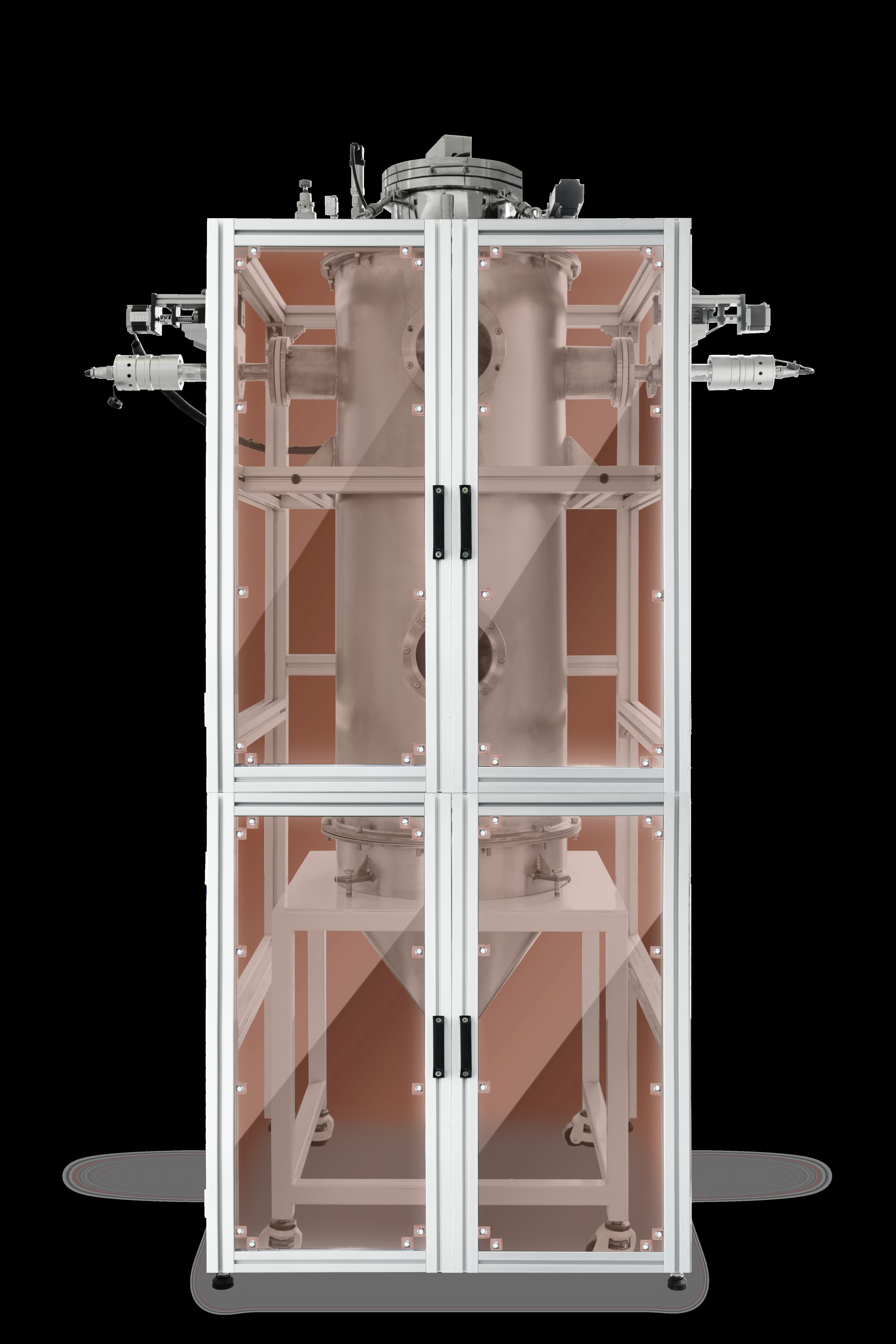
How Ultrasonic Metal Powder Making Equipment Works: Physics, Process, and Key Advantages
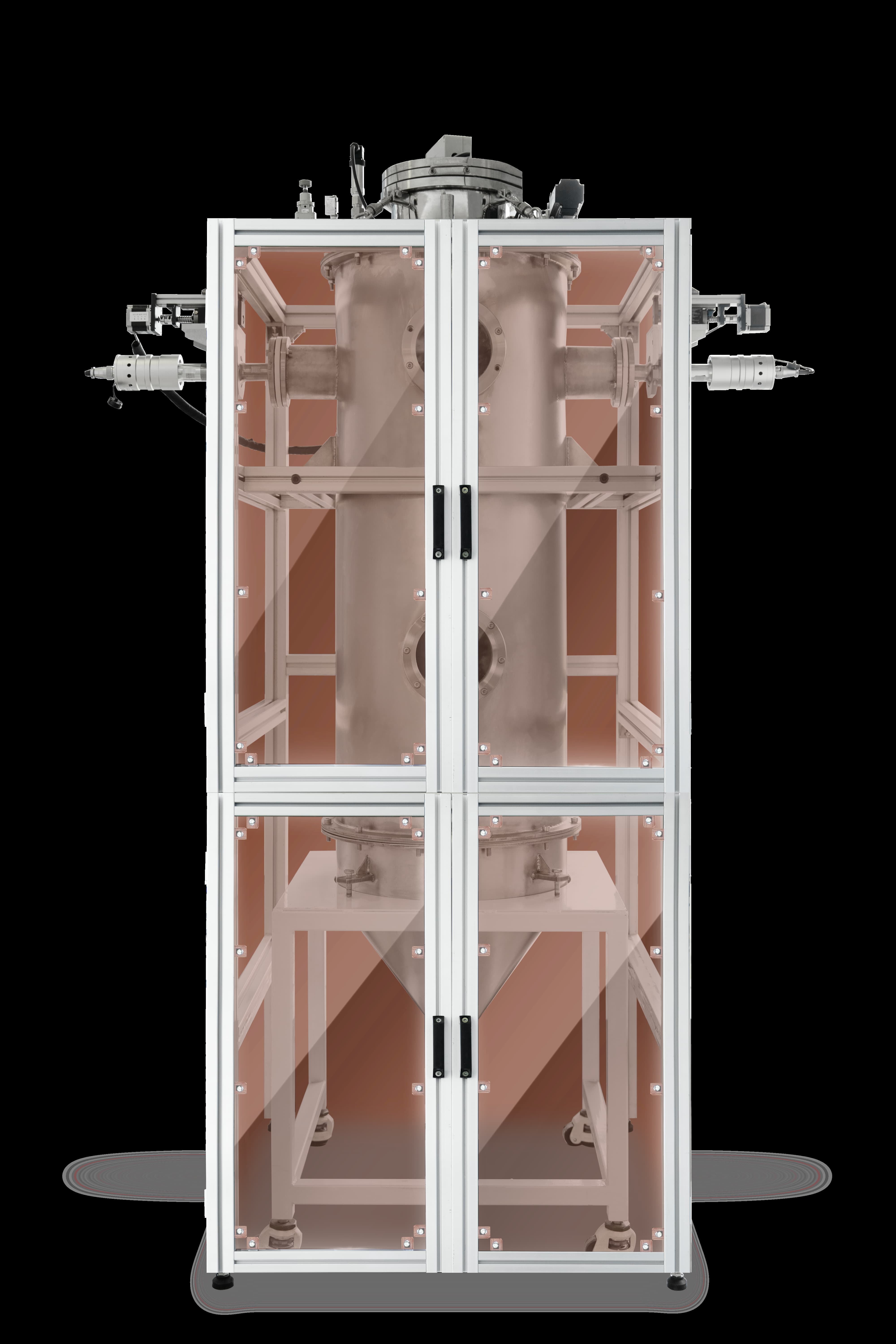
Cavitation-Driven Atomization: The Science Behind Uniform Droplet Formation
The ultrasonic metal powder production system works by using high frequency vibrations between 20 and 40 kHz to turn molten metal into very precise powders. What makes it work? Cavitation happens when tiny vapor bubbles form quickly and then burst violently within the metal stream. When the ultrasonic energy moves through the liquid metal, these exploding bubbles create really intense pressure spots over 1,000 times atmospheric pressure. This pressure basically breaks apart the molten material into almost perfectly sized droplets through what's called controlled hydrodynamic instability. The best part about this method? No need for fast moving gas or water jets which tend to mess things up. Without all that turbulence, the particles solidify evenly across the board. By adjusting the resonant frequencies, manufacturers can keep track of how big each particle gets. The result is round powders where most fall within just 5% difference in size, way better than what traditional techniques manage to produce.
Comparison with Gas/Water Atomization: Yield, Sphericity, and Oxidation Control
Unlike gas or water atomization—which rely on chaotic fluid shear—ultrasonic atomization achieves superior metallurgical outcomes through kinetic isolation and inert-atmosphere containment. This eliminates oxidation during fragmentation, a critical advantage for oxygen-sensitive alloys like Ti-6Al-4V and Ni/Co superalloys.
Precision Output: Achieving >95% Sphericity and Tight Particle Distribution
Morphology Benefits: Flowability, Packing Density, and Laser Melting Compatibility
The process of ultrasonic atomization produces powders that are almost perfectly spherical, with sphericity rates above 95%. This shape makes them flow much better because there's less friction between particles, which means they spread out evenly across automated systems. When we look at packing density, those uniform spheres can reach over 60% of theoretical maximum density, leaving fewer gaps in green parts before sintering occurs. In additive manufacturing applications, having consistent geometry matters a lot for how energy gets absorbed during selective laser melting (SLM) processes. Manufacturers have found that this leads to about 45% fewer balling defects than what happens with irregularly shaped particles. Particle size distribution remains tight too, usually with D90/D10 ratios under 2.0, which helps maintain consistent layer thicknesses in powder bed systems. All these characteristics together cut down on material waste by around 18% when making parts, while also supporting better microstructure formation and ultimately stronger mechanical properties in finished components.
Real-World Validation: Ti-6Al-4V and Inconel 718 Powders (D50 = 20—25 µm, <0.5% Satellites)
Testing in industrial settings shows these materials perform exceptionally well even with tough alloy requirements. Both Ti-6Al-4V and Inconel 718 powders regularly reach particle size distributions around 20 to 25 microns with very little variation (under 5 microns), which meets the strict tolerances needed for aerospace components. The process also keeps satellite particles down to less than half a percent by fine-tuning frequency parameters, which is actually three times better than what traditional methods can accomplish. This makes a real difference in production since it reduces nozzle blockages during metal injection molding and creates more stable flow properties when using binder jetting techniques. When looking at Inconel 718 specifically, we maintain oxygen levels below 200 parts per million, something critical for maintaining strength at high temperatures. For titanium alloys like Ti-6Al-4V, the powder has an even mix of alpha and beta phases that's perfect for medical implants. These powders typically reach about 99.7% density after sintering and show tensile strength above 900 megapascals, proving they work across different manufacturing sectors from aerospace to healthcare.
Scalable Ultrasonic Metal Powder Making Equipment for R&D and Production
The ultrasonic metal powder manufacturing system acts as a bridge between laboratory experiments and full scale production thanks to its modular design that can grow with needs. Labs find it particularly useful because they can make test batches whenever needed, sometimes as little as 100 grams. This works great for those tricky high melting point alloys such as the refractory high entropy ones that require temperatures over 2000 degrees Celsius. Scientists working with this equipment typically see around 70 percent reduction in wasted materials compared to traditional methods, which means they can run their tests much quicker and get results faster when developing special additive manufacturing feedstocks. Scaling up to industrial levels isn't a problem either since manufacturers can boost output either by adding multiple nozzles at once or adjusting frequencies dynamically while still keeping the same quality standards for particles. Important specs stay consistent throughout different production volumes too, including maintaining oxygen levels below 0.3% in reactive metals and ensuring most particles measure under 45 microns in diameter (D90). These specs are crucial for parts used in jet engines and other aerospace applications where reliability matters most. Plus there's the environmental angle worth mentioning here, since closed loop systems let companies recycle nearly all their leftover AM material back into brand new certified feedstock, cutting down waste significantly.
Targeted Industrial Adoption: Aerospace, Biomedical, and Additive Manufacturing Use Cases
Aerospace: High-Purity Ni-Based Superalloy Powders for Turbine Components
The ultrasonic atomization process really stands out when it comes to meeting those tough standards required for making aerospace turbine parts, especially when working with nickel based superalloys that need to function at temperatures over 1000 degrees Celsius. What makes this method so effective is how it produces particles with more than 95 percent sphericity and very consistent size distribution around 20 to 45 microns diameter. These characteristics are crucial for getting good flow properties during laser powder bed fusion processes. The end result? Parts that are densely packed with fine grain structures throughout. And let's not forget the bigger picture here. Better fatigue resistance means longer lasting components, while meeting those strict purity and consistency standards set by aviation authorities becomes much easier when manufacturing critical rotating parts that simply cannot fail mid flight.
Biomedical: Low-Oxygen, Spherical Ti-6Al-4V for Patient-Specific Implants
Biomedical applications benefit greatly from inert atmosphere processing which brings oxygen levels down to under 500 ppm in Ti-6Al-4V materials, about 60 percent lower than what traditional methods achieve. This helps maintain both biocompatibility and structural strength of the material. When combined with satellite content below half a percent, the spherical shape allows for even distribution within complex shapes needed for custom made cranial plates and spinal implants. The way these materials behave during sintering in binder jetting systems, along with their low internal porosity, makes them last longer when subjected to repeated stress cycles. These characteristics match up well with FDA standards regarding implant safety and overall performance requirements.
FAQ
What is ultrasonic metal powder making equipment?
Ultrasonic metal powder making equipment is a system that utilizes high-frequency vibrations to transform molten metal into precise metal powders using processes involving cavitation and controlled hydrodynamic instability.
How does ultrasonic atomization differ from gas or water atomization?
While gas or water atomization rely on fluid shear, ultrasonic atomization isolates the process in an inert atmosphere which results in reduced oxidation, higher sphericity, and lower oxygen pickup in the powder.
What are the benefits of achieving high sphericity in metal powders?
High sphericity in metal powders enhances flowability, packing density, and compatibility with laser melting processes, leading to fewer defects, reduced material waste, and improved mechanical properties in manufacturing.
What industries benefit most from ultrasonic metal powder production?
Industries such as aerospace and biomedical benefit greatly due to the stringent material properties required, which ultrasonic atomization methods help achieve.
Is ultrasonic metal powder making equipment scalable?
Yes, ultrasonic metal powder making equipment is scalable. It features a modular design that can cater to both research and development as well as full-scale production, adjusting output and maintaining consistent quality standards.
Table of Contents
- Precision Output: Achieving >95% Sphericity and Tight Particle Distribution
- Scalable Ultrasonic Metal Powder Making Equipment for R&D and Production
- Targeted Industrial Adoption: Aerospace, Biomedical, and Additive Manufacturing Use Cases
-
FAQ
- What is ultrasonic metal powder making equipment?
- How does ultrasonic atomization differ from gas or water atomization?
- What are the benefits of achieving high sphericity in metal powders?
- What industries benefit most from ultrasonic metal powder production?
- Is ultrasonic metal powder making equipment scalable?