
 EN
EN
Unmatched Testing Speed and High-Cycle Resolution with the Multifunctional Ultrasonic Fatigue Test System
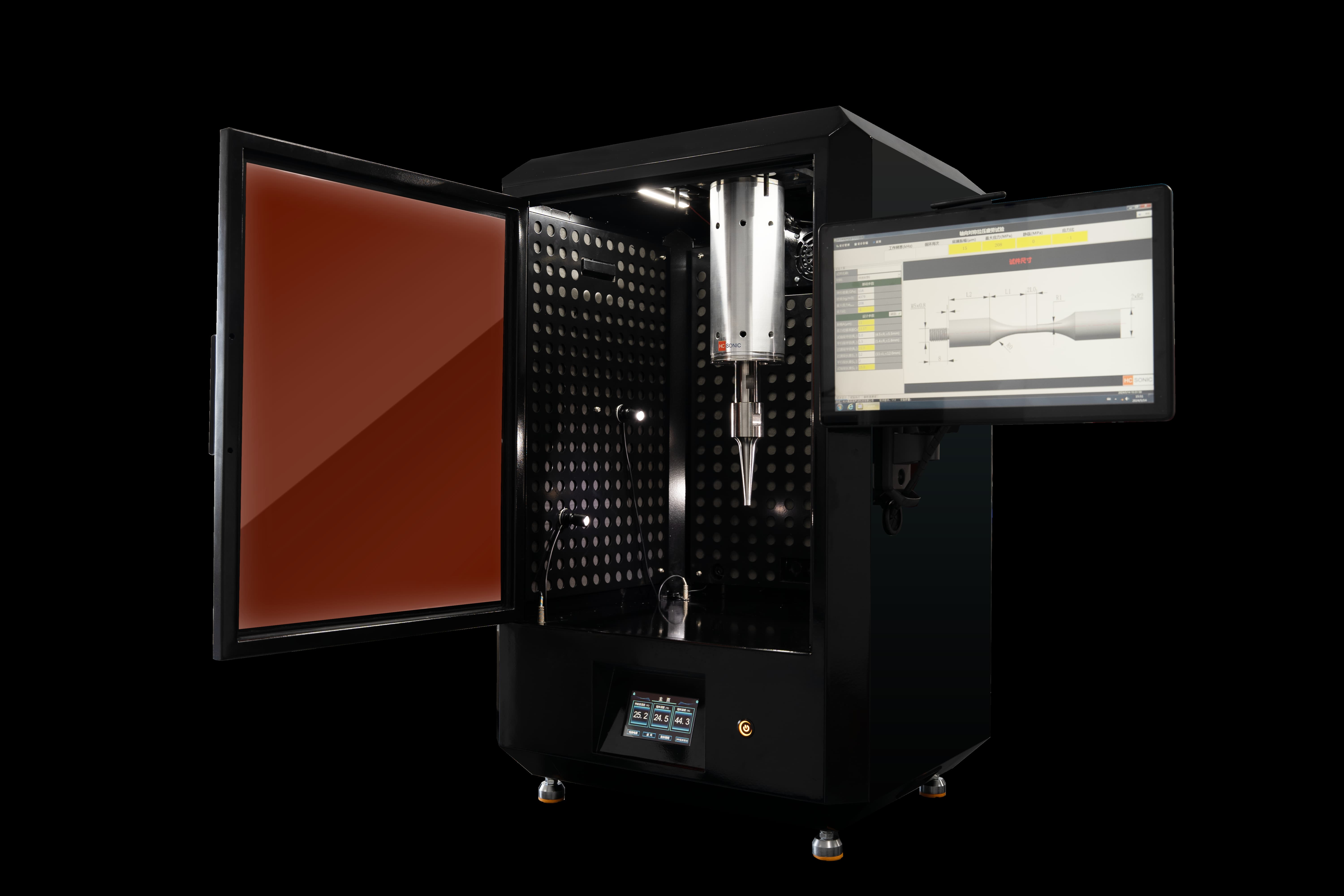
How Resonance-Driven Ultrasonic Loading (20–100 kHz) Achieves >10¹ Cycles in Under 1 Hour
An ultrasonic fatigue test system works by using resonance driven loading between 20 to 100 kHz frequencies, which allows researchers to get ultra high cycle fatigue data within hours instead of waiting for months. Traditional hydraulic systems operating below 100 Hz typically take years to complete what would be considered 10^10 cycles. In contrast, ultrasonic testing can accomplish around 1 billion cycles in less than an hour. This represents about 300 times faster testing because it applies anywhere from 20 thousand to 100 thousand stress cycles each second compared to only 20 to 60 cycles per second in older methods. Research published in peer reviewed journals shows there isn't much difference in results across different frequencies when looking at both high cycle (HCF) and very high cycle (VHCF) testing ranges. This means the speed boost doesn't compromise the accuracy needed for proper mechanical analysis or meet industry standards requirements.
Bridging the 20– Speed Gap: Real-World Validation on Ti-6Al-4V Using the USFT-500 System
Testing with aerospace grade Ti-6Al-4V shows how much better this system performs compared to traditional methods. The USFT-500 gets complete VHCF results 20 times quicker than those old servo-hydraulic machines, all while meeting ASTM and ISO standards. What used to take seven whole days? Finding fatigue limits at 100 million cycles. Now it's done in just eight hours flat. And the real impact? Labs can run fifteen times as many tests each week. That means faster connections between material defects and microstructure issues in things like additive manufacturing where these tiny structural differences really matter for performance and safety.
Real-Time, Multi-Modal Damage Intelligence Enabled by the Multifunctional Ultrasonic Fatigue Test System
Acoustic Emission Monitoring Detects Crack Initiation 300+ Cycles Before Macroscopic Failure
Acoustic emission or AE monitoring gives us a head start on spotting damage long before traditional methods catch on. These special sensors pick up those tiny high frequency stress waves that happen when micro cracks start forming. We've seen cases where they spot problems over 300 cycles ahead of time compared to visible failures. For parts where safety matters most, like in aircraft made from aerospace alloys, catching these hidden flaws early can literally prevent disasters down the road. Most shops stick to the ASTM E976 guidelines for processing signals because it keeps results consistent between different tests and technicians.
Integrated Sensing Fusion: Cross-Validating AE, Resonance Shift, and Nonlinear Parameters
Modern ultrasonic fatigue systems integrate three complementary diagnostics into a unified damage intelligence framework:
- Acoustic emission (AE) detects crack initiation events;
- Resonance frequency shift quantifies progressive stiffness loss from evolving damage;
- Nonlinear ultrasonic parameters (e.g., harmonic generation, wave mixing) track microstructural degradation such as dislocation accumulation or grain boundary sliding.
Cross-validation eliminates false positives and establishes material-specific failure thresholds. A NASA-validated methodology demonstrated 98% correlation among these metrics during titanium fatigue testing—transforming isolated measurements into predictive, physics-informed insights.
Accelerating Industrial Adoption: Standards Compliance and Application-Specific Versatility
Meeting Critical Industry Demands — Aerospace Microstructure Sensitivity and AM Defect Characterization
This technology tackles two major problems facing the manufacturing sector today: fatigue issues related to microstructures in aerospace metals and failures caused by defects in 3D printed components. When dealing with turbine materials, the system can actually pinpoint grain boundary effects at around 5 to 10 micrometers, which is fine enough to catch those early warning signs before parts fail during flight operations. For additive manufacturing quality checks, it spots hidden porosity from poor fusion beneath surfaces with about 92% accuracy compared to traditional micro CT scans, all while reducing overall testing time by roughly 40%. What makes this particularly valuable for producers is how it connects specific printer settings like laser intensity, scanning rates, and layer heights directly to actual fatigue test results. This connection helps engineers build products that last longer from the start rather than fixing problems after they occur.
Embedded Compliance Architecture: ISO 12737 and ASTM E3258 Integration in Modular Software
Compliance doesn't just get added at the end of the process but starts right within the workflow itself. Our system comes with pre-set modules that handle important standards like ISO 12737 for measuring how tough metals are when they break, plus ASTM E3258 which deals with ultrasonic fatigue tests. These modules constantly check data against hundreds of rules from different industries including aerospace, medical devices, and energy sectors. What makes this stand out? The software creates ready-for-audit reports automatically in just 15 minutes flat, something that used to take people eight whole hours manually. Plus it takes away any guesswork when deciding if something passes or fails. When running continuous production lines, we've seen certification holdups cut down by around two thirds, and every batch maintains the same high quality throughout.
Frequently Asked Questions
What is the primary advantage of ultrasonic fatigue testing over traditional methods?
The primary advantage is the speed; ultrasonic fatigue testing can achieve 1 billion cycles in under an hour compared to years for traditional methods.
How does Acoustic Emission (AE) Monitoring contribute to safety?
AE Monitoring detects microscopic flaws early, potentially over 300 cycles before they become visible, thus preventing potential component failure and enhancing safety.
How does the technology address defects in 3D printed components?
The system can identify hidden porosity beneath surfaces with 92% accuracy, linking printer settings directly to fatigue test results to improve product longevity.
Table of Contents
- Unmatched Testing Speed and High-Cycle Resolution with the Multifunctional Ultrasonic Fatigue Test System
- Real-Time, Multi-Modal Damage Intelligence Enabled by the Multifunctional Ultrasonic Fatigue Test System
- Accelerating Industrial Adoption: Standards Compliance and Application-Specific Versatility
- Frequently Asked Questions