 EN
EN
- Overview
- Recommended Products
Ultrasonic atomization nozzle – micro-sized type
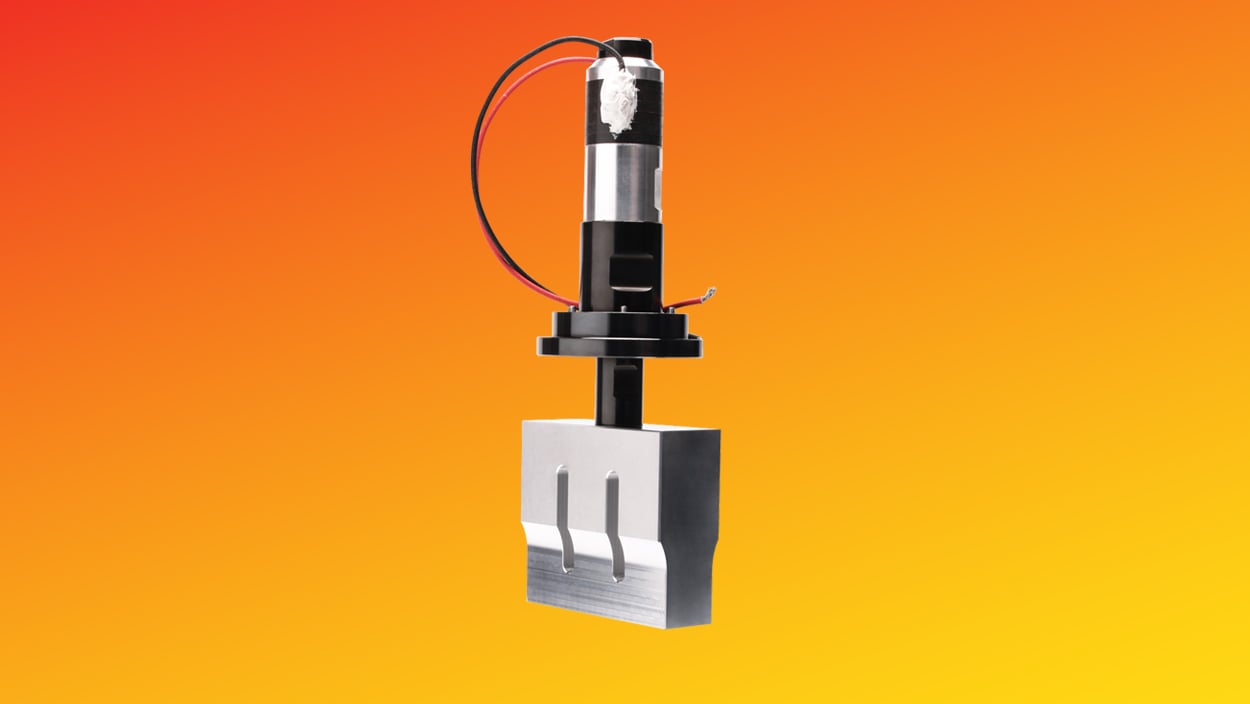
The ultrasonic micro-nebulization nozzle combines a focused ultrasonic nozzle, a multi-channel liquid delivery tube, and a low-pressure guided carrier gas, collectively generating a gentle, highly focused mist stream.
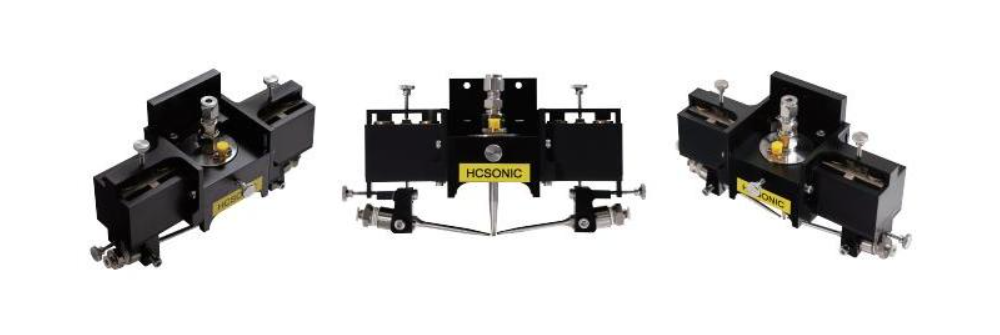
Micro-sized atomizing nozzles from different perspectives
Experimental Demonstration
Plant parameter
| Device Model: HC-LAWX-GL | Spray width: 1–5 mm | Diversion pressure: <0.01 MPa |
| Frequency range: 30–120 kHz | Liquid viscosity: <30 cps | Operating temperature: 20–80°C |
| Nebulized particles: 15–40 μ | Spray Height: 5–30 mm | Spray flow rate: 0.001–1 ml/min |
Example Demonstration
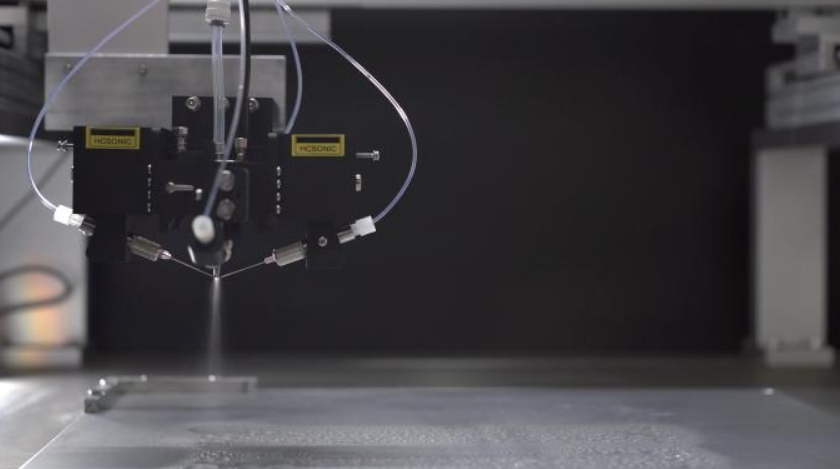
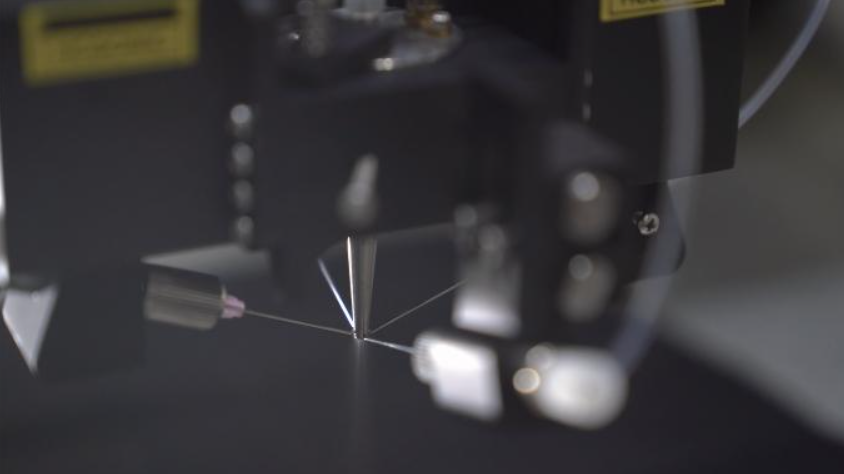
Ultrasonic vortex-type atomization spraying
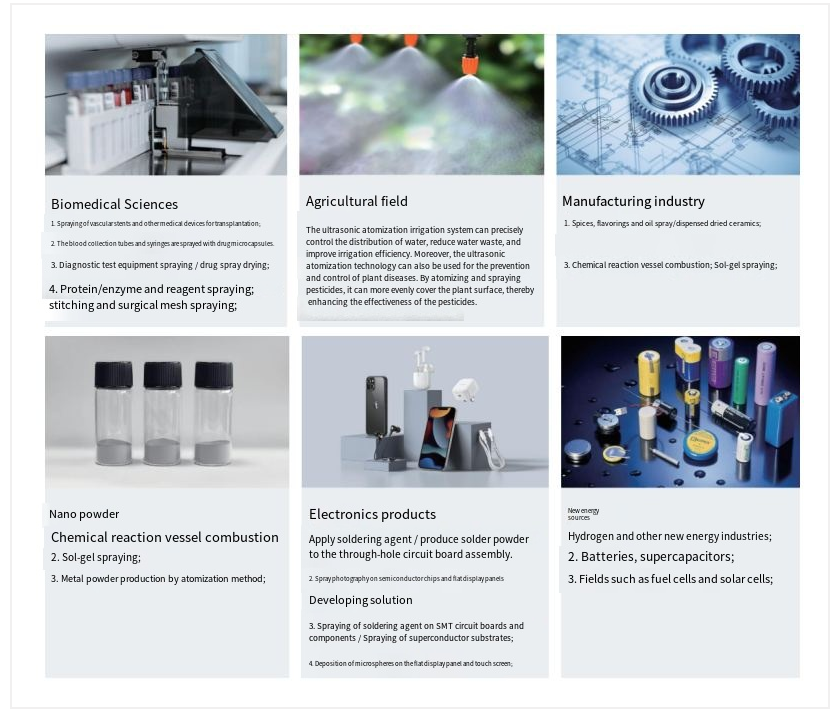
Application Scope of Ultrasonic Nebulization
Common Questions Guide
1. How to prevent blockage of the ultrasonic nebulizer head?
(1) Understand the liquid properties prior to atomization; if the viscosity is excessively high or the solid content is too high, pretreatment is required. (2) Perform pipeline cleaning shortly after equipment shutdown.
2. How to address blockage of the ultrasonic nebulizer head?
The inlet and outlet ports of ultrasonic atomization heads typically have a diameter of 5 mm; fine needle holes with diameters less than 5 mm can be used for passage, and the tubing should be cleaned with solvent after opening.
3. Does the fluid supply system affect ultrasonic atomization?
The liquid supply significantly impacts the atomization efficiency of ultrasound. Instability in the liquid delivery system may lead to issues such as intermittent atomization and nozzle clogging. Therefore, when selecting a liquid supply pump, it is essential to consult with our technical team.
4. Is using 70% power consistently for sample processing appropriate? Other power levels should be tested to assess their impact on results. If identical results are achieved at 50% power, reaching 70% is unnecessary. However, it is recommended to maintain power below 80% to extend equipment lifespan.
5. Is higher air pressure always preferable during ultrasonic atomization? The efficacy of ultrasonic atomization is independent of air pressure; pressure primarily serves to operate the cooling equipment and guide the flow direction. Users should adjust the appropriate air pressure according to actual operational conditions during spraying, as excessively high pressure may 오히려 compromise the atomization quality.
6. Why does the mist stream become intermittent during atomization? (1) This is related to the liquid composition itself; for instance, high molecular organic solutions can react violently with ultrasound, generating numerous bubbles at the inlet that cause intermittent mist emission. If the liquid composition cannot be altered, a side-flow atomizing nozzle can be used to address this issue. (2) Poor sealing of the liquid supply pipeline allows air bubbles to enter, resulting in intermittent mist flow; the pipeline should be inspected and replaced if necessary.