
 EN
EN
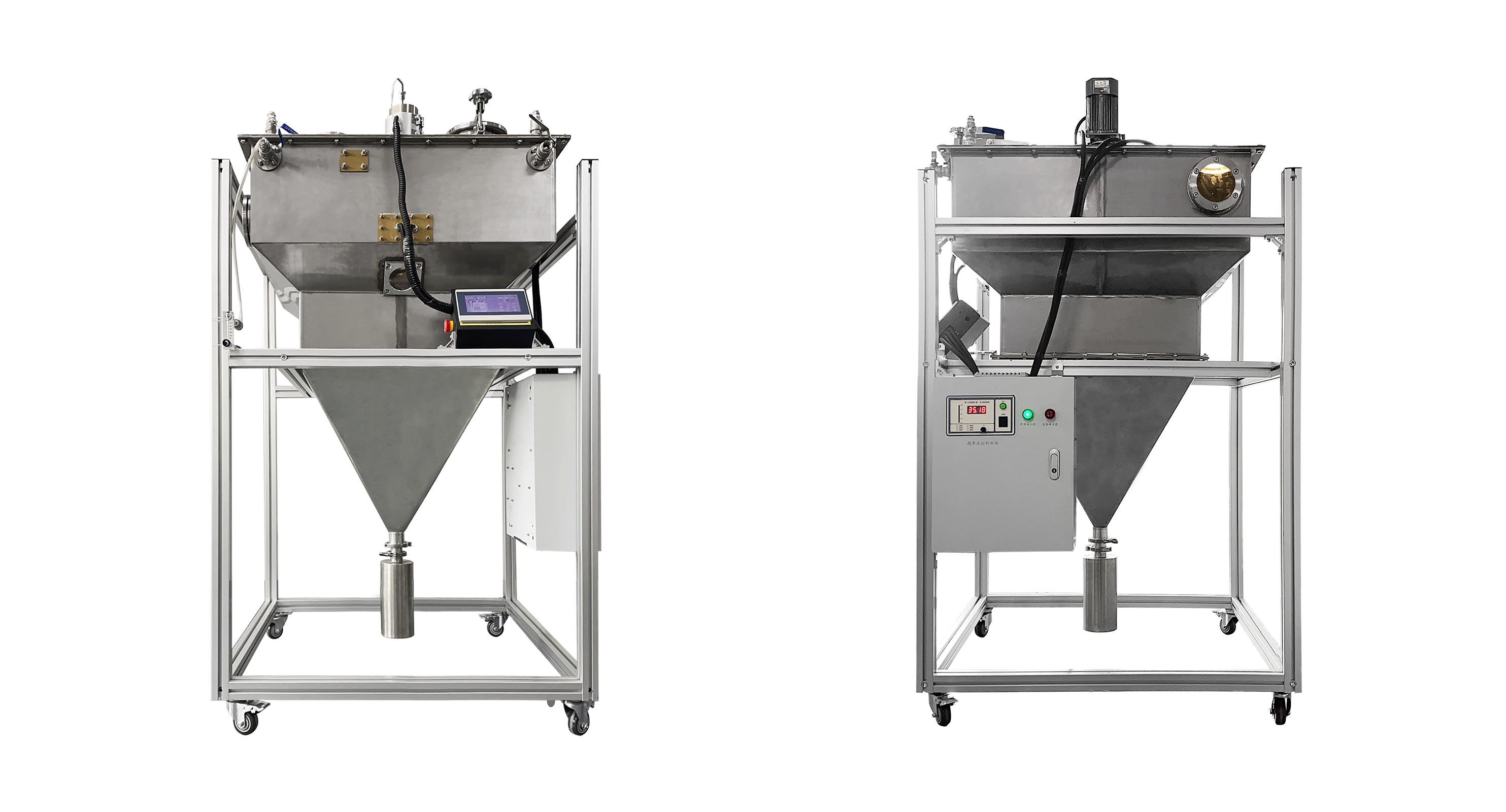
Ultra-high purity: How ultrasonic metal powder manufacturing equipment minimizes oxidation and contamination
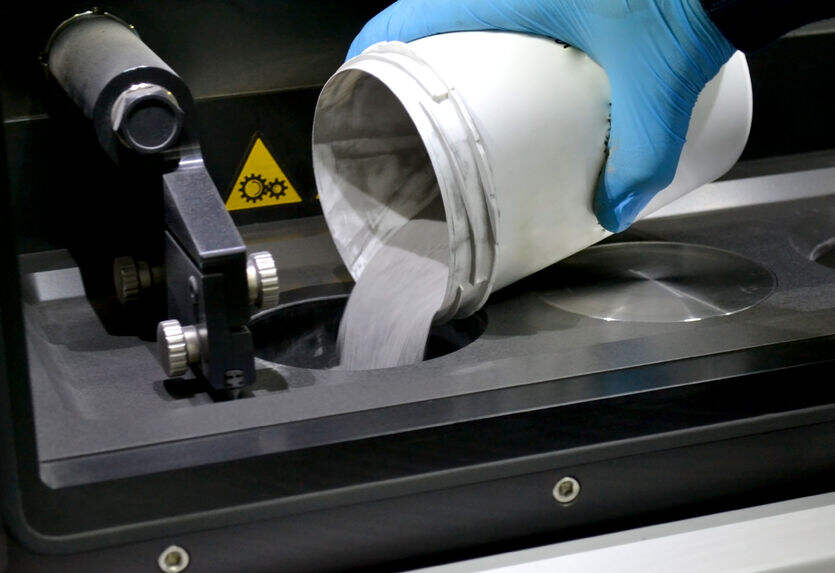
Ultrasonic atomization under an inert atmosphere can inhibit the formation of an oxide layer.
Ultrasonic metal powder manufacturing equipment operates within a sealed container filled with inert gases such as argon or nitrogen. This device prevents oxygen in the air from coming into contact with the broken molten metal during atomization. The high-frequency vibrations generated by the equipment form uniformly sized droplets that solidify almost instantaneously, significantly reducing the likelihood of their surface reacting with oxygen. Industry data shows that these systems can reduce oxide layers by more than 60% compared to traditional methods conducted in ordinary air environments. For companies manufacturing components for precision electronic devices, this controlled environment is crucial for maintaining product quality standards throughout the production process.
Oxygen content benchmark: <150 ppm compared to >500 ppm in conventional aerosolized powders (ASTM B964-22)
Tests show that the ultrasonic system can reduce oxygen content to below 150 parts per million (ppm), meeting the ASTM B964-22 standard and satisfying the production requirements of high-purity metal powders. Traditional atomization techniques, on the other hand, typically result in oxygen content exceeding 500 ppm. Excessive oxygen content causes numerous problems: reduced solder joint reliability, increased resistance, and the appearance of tiny gaps at microelectronic component interfaces. What does all this mean? The ultrasonic method achieves a 3.3-fold increase in purity, leading to significant performance improvements across various applications. It results in better circuit printing, more reliable semiconductor packaging, and smoother signal transmission in high-frequency circuits.
Precise particle control: fine, uniform powder for reliable microelectronic sintering
The D50 distribution range is narrow (5-15 µm), and the batch-to-batch repeatability is good (±0.8 µm).
Ultrasonic metal powder preparation equipment can precisely control particle size, maintaining a D50 value of approximately 5 to 15 micrometers. This is ideal for manufacturing micro-components in electronics. Regarding batch consistency, the deviation is less than ±0.8 micrometers according to ASTM standards, superior to traditional atomization techniques (which typically have deviations exceeding 5 micrometers). This stricter control means no additional sorting steps are required after processing, sintering defects are reduced by nearly 90%, and the powders can be used directly in high-precision production systems without requiring a complete recertification process.
Enhanced densification: Silver nanoparticle paste for flexible PCB metallization achieves a densification rate of 99.8% at 220°C.
Silver nanopowder prepared using an ultrasonic method achieves a density of approximately 99.8% even at temperatures as low as 220 degrees Celsius, 300 degrees Celsius lower than the temperatures required for conventional sintering processes. This lower temperature significantly reduces the likelihood of warping in flexible printed circuits while maintaining good conductivity above the 92% IACS standard. Industry data shows that in high-frequency applications, when manufacturers switch to these specially formulated powders, component failure rates can be reduced to below 0.1%. This makes them ideal for a variety of demanding microelectronic applications with extremely high performance requirements.
Optimized morphology and flowability: Spherical low-oxygen powder for high-fidelity additive manufacturing processes
With a sphericity >0.92, uniform aerosol jet printing and thin film deposition can be achieved.
Ultrasonic equipment used for metal powder production can create powders with a sphericity exceeding 0.92, meaning near-perfect shapes that significantly improve powder flowability and packing properties. These spherical particles achieve an impressive packing density of around 99.8% in thin-film applications. Their angle of repose is also reduced by approximately 17.8 degrees compared to irregularly shaped powders on the market, resulting in finer detail in metal structure printing. More importantly, this powder shape can be obtained without any additional spheroidizing steps, resulting in a shorter overall process flow while maintaining oxygen content below 150 parts per million. For manufacturers using silver nanoparticles, this means stable conductivity even in fine lines smaller than 10 micrometers. Furthermore, its impact on practical applications cannot be ignored: printing plants report approximately 40% improvement in resolution after using aerosol jetting and similar advanced printing methods.
Integrated process integrity: Closed-loop ultrasonic metal powder manufacturing equipment prevents cross-contamination.
The sealed design of the ultrasonic metal powder manufacturing equipment effectively prevents airborne contaminants and physical contact at every critical step of production. The interior is a completely enclosed space filled with inert gas and equipped with a vacuum system and multiple high-efficiency particulate air (HEPA) filters before processing begins, capturing over 99.97% of particles smaller than 0.3 microns. This system effectively blocks workshop dust, prevents moisture buildup, and controls oxygen levels. The entire sealed system helps maintain batch-to-batch consistency of material composition while reducing metal impurities to below 50 ppm (compliant with ISO 14644-1 Class 7 cleanroom standards). For manufacturing ultrapure materials for microelectronics, these stringent controls prevent the formation of unwanted inclusions that typically affect the density of the final sintered product, the adhesion between layers, and the overall conductivity of the material.
Frequently Asked Questions Section
What are the main advantages of using ultrasonic metal powder manufacturing equipment?
Its main advantage lies in its ability to produce high-purity metal powders by minimizing oxidation and contamination, thereby improving the performance of microelectronic devices.
How does ultrasonic atomization achieve low oxygen content?
Ultrasonic atomization utilizes an inert gas environment to prevent oxygen from coming into contact with molten metal, thus keeping the oxygen content at a low level, typically below 150 parts per million.
What is the significance of granularity control in this process?
Strict particle size control ensures high precision in microelectronic devices, reduces defects, and eliminates additional sorting steps in production.
Why is high sphericity important for metal powders?
High sphericity can improve powder flowability and packing properties, enhance film quality and fine metal feature printing effects without the need for additional processing steps.
Table of Contents
- Ultra-high purity: How ultrasonic metal powder manufacturing equipment minimizes oxidation and contamination
- Precise particle control: fine, uniform powder for reliable microelectronic sintering
- Optimized morphology and flowability: Spherical low-oxygen powder for high-fidelity additive manufacturing processes
- Integrated process integrity: Closed-loop ultrasonic metal powder manufacturing equipment prevents cross-contamination.
- Frequently Asked Questions Section